Get Full Government Meeting Transcripts, Videos, & Alerts Forever!
Get email alerts on the Public Lands Affordable Housing topic
No spam. Unsubscribe anytime.
San Francisco committee hears public push to preserve Potrero police station as city weighs surplus-land list
Summary
The Land Use & Transportation Committee reviewed the city—s first surplus-property report under Prop K, heard neighborhood appeals to remove the historic Potrero Police Station (2300 Third Street) from the transfer list, received feasibility criteria from MOHCD and updates from enterprise agencies, and filed the report without objection.
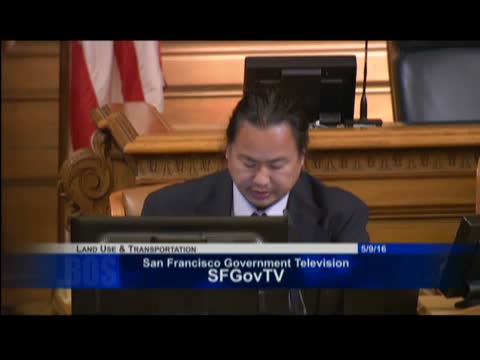
The San Francisco Board of Supervisors— Land Use & Transportation Committee on Monday held its first public hearing on the city—s updated surplus-property process under last year—s Proposition K, reviewing a list of city-owned sites and receiving community pleas to shield the historic Potrero Police Station from disposition.
"I share the perspective that the old patrol station at 2300 Third Street is not the most feasible site for affordable housing development," Chair Supervisor Malia Cohen said, urging colleagues to consider removing the property from the transfer list and to weigh community-serving reuses.
The hearing reviewed the process established by the 2002 surplus-property ordinance as amended by voters in 2015. City Administrator Naomi Kelly and John Updike, director of the Department of Real Estate, described the new workflow: departments flag candidate parcels, Real Estate and MOHCD conduct feasibility analyses under Prop K standards, and the city prioritizes affordable-housing uses where feasible. Updike identified two parcels above the quarter-acre threshold for further study: the Potrero Police Station and an assemblage at 155/165 Grove and 240 Van Ness.
Theresa Younger of the Mayor—s Office of Housing and Community Development summarized MOHCD—s feasibility criteria: whether a site has long-standing community use or historic designation, lot size and configuration, zoning and the need for rezoning, site topography and remediation costs, transit accessibility, and whether the parcel can accommodate housing plus support services without unsustainable subsidy requirements.
Enterprise departments with substantial land holdings also briefed the committee. Michael Carlin of the San Francisco Public Utilities Commission said the PUC first seeks intra-agency reuse and noted prior trades (citing Seventeenth & Folsom) that enabled later housing development. Raffy Robles of SFMTA described candidate sites including the Upper Yard (adjacent to Balboa Park BART) and Fourth & Folsom, and said SFMTA is studying surface parking lots and muni yards for possible air-rights or joint development. David Golden of the San Francisco Unified School District said sales and transfers are governed by the California Education Code and described ongoing collaboration with MOHCD on workforce- and teacher-housing projects.
Community speakers from Dogpatch and housing-advocacy groups told the committee they favor preserving the Potrero station—s historic facade and activating it as a community-serving facility rather than converting it to housing, while other advocates urged that publicly owned land (including Balboa Reservoir) be prioritized for deeply affordable units. Former Mayor Art Agnos told the panel the Potrero site should be preserved and reused as a community facility while protecting its historic fabric.
On procedural outcome, the committee filed the surplus-property report without objection, effectively closing the public hearing record while leaving feasibility analyses and next steps to MOHCD and Real Estate. Supervisor Jane Kim, the author of the hearing and sponsor of related proposals, said the Prop K process is intended to vet feasibility before any transfer so that the city can prioritize affordable housing and other public uses where appropriate.
Next steps: MOHCD and the Department of Real Estate indicated they will proceed with the Prop K feasibility work called for in the report, and enterprise agencies said they will continue coordination on RFQs and environmental reviews where federal funds are involved. The committee did not adopt any ordinance or transfer at the meeting; it filed the report and left substantive decisions to subsequent feasibility studies and potential future actions.