Get Full Government Meeting Transcripts, Videos, & Alerts Forever!
Get email alerts on the Public Safety Bond topic
No spam. Unsubscribe anytime.
Committee advances $652 million earthquake safety bond to full board; waivers for 1600 Owens purchase deferred
Summary
The San Francisco Budget and Finance Committee voted to send a $652,070,000 Earthquake Safety and Emergency Response general-obligation bond to the full Board with a recommendation, while continuing separate legislation that would waive competitive-bidding rules tied to purchasing 1600 Owens Street. Budget analysts flagged $132 million of unspecified projects and asked for more cost-benefit detail.
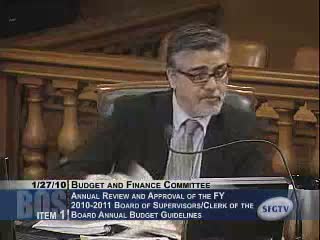
San FranciscoBudget and Finance Committee Chair Supervisor John Avalos on Wednesday moved items 3 and 4—resolutions related to a proposed $652,070,000 Earthquake Safety and Emergency Response general-obligation bond—to the full Board of Supervisors with a recommendation, while the committee continued related legislation proposing waivers of the citycompetitive-bidding rules to a later date.
The measure would fund four principal components: $34 million to seismically upgrade above-ground components of the Auxiliary Water Supply System (AWSS) including pump stations, tanks and related facilities; $132 million allocated to a set of critical firefighting infrastructure projects (some specific projects have not yet been identified); roughly $236 million for a Public Safety Building (police headquarters plus district station and an embedded fire station); and about $239 million for a consolidated Forensic Science Center and associated facilities. City Administrator Ed Lee and Public Works staff framed the bond as the first in a series of capital investments to address long-identified seismic backlogs.
"This bond has the objective of safeguarding our families, protecting more homes and businesses," City Administrator Ed Lee said, noting the city had not focused a general-obligation bond on public-safety infrastructure for about 18 years. Deputy Chief Gary Masotany described upgrades to the AWSS and the addition of cisterns, and Police Chief Gascon warned that an inoperable crime lab or headquarters would severely hamper emergency command, control and long-term criminal investigations.
Budget analyst Harvey Rose told the committee that $132 million of the proposed package funds projects that have not yet been specifically identified in publicly available materials and that voters therefore would not see the full list of projects tied to that portion of the bond. Rose also noted the budget officeestimated an isolated tax effect of about $110.93 annually on a $500,000 single-family home if the bond were considered alone, though department modeling factoring debt restructuring projects showed no net tax increase under certain assumptions.
Supervisors pressed administration officials on two interlocking issues: the decision to seek a Chapter 6 waiver of the city's competitive-solicitation rules to assume contracts the private developer had procured for 1600 Owens Street, and the absence of a formal, written cost-benefit analysis comparing the administrationproposal to alternative delivery options (leasing space, rebidding design or CMGC services, or the city building via standard procurement).
"My concern is process," Supervisor David Campos said. He noted the redevelopment agencyprocurement that produced the current design team does not automatically satisfy the Administrative Code's Chapter 6 requirements and asked for documentation demonstrating the earlier competitive steps. The administration said redevelopment agency procurement follows rules that "mirror" Chapter 6 and 14(b), but that the redevelopment agency itself is not subject to the city's Chapter 6. Public Works estimated the construction package at roughly $155 million and said the value of the negotiated role with DPR as construction-manager/general-contractor would likely be about $15 million; the design work already completed was estimated at about $5 million to date with further amounts to finish the documents.
Public Works defended seeking the waiver on grounds of time, continuity and risk: officials said changing the design team now would likely add about six months and roughly $4 million in escalation and procurement costs and could increase the cityliability exposure as a new designer would need to assume designer-of-record responsibilities.
Deputy City Attorney Cheryl Adams told the committee that the ordinance and resolution would need to meet timeline requirements to qualify for the June ballot: the last date for a first hearing to get on the ballot is Feb. 9, with a second reading later in the month.
Public comment included support from members of SPUR's disaster-preparedness task force, who urged expanding AWSS and cistern work to serve neighborhoods currently underserved by the system. Fire Department leadership said the proposal would add approximately 24 to 32 cisterns in the western part of the city in addition to repairs of existing cisterns but cautioned that exact locations require site-level investigation.
The committee voted to forward items 3 and 4 to the full Board with a recommendation (scheduled for early February) and to continue item 5 (the ordinance seeking authority to acquire 1600 Owens and the Chapter 6 waivers) to a subsequent committee meeting so the administration and the budget office can provide requested documentation and analysis.
What's next: The administration said it will provide documentation on earlier procurement processes, a more formal cost-benefit accounting of the delivery options and prioritization details for the unspecified projects. The first Board hearing deadline to place the bond on the June ballot is Feb. 9; the committee left room to refine project specificity and to return the waiver item with additional information.