Get Full Government Meeting Transcripts, Videos, & Alerts Forever!
Get email alerts on the Entertainment Permits topic
No spam. Unsubscribe anytime.
Land Use Committee advances changes to entertainment-permit waiver and notice rules
Summary
The committee forwarded an ordinance that codifies fee-waiver criteria for loudspeaker/amplification permits and modernizes neighborhood notice for outdoor events, while directing staff and the Entertainment Commission to refine language on city-funded events and mailed/electronic notice.
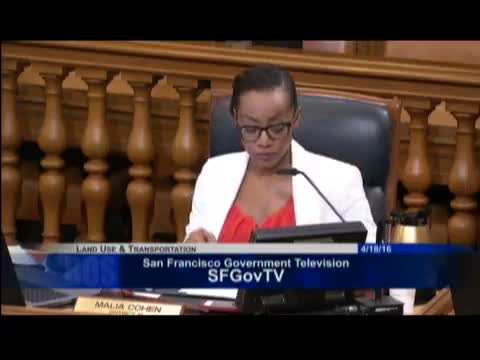
The Land Use and Transportation Committee on April 18 advanced an ordinance to update Entertainment Commission permit procedures, including formal criteria for waiving loudspeaker and amplification filing fees and revised neighborhood-noticing rules. Supervisor Scott Weiner, the sponsor, said the bill "codifies the criteria and procedures for waiving the filing fee for loudspeaker permits" for applicants who declare financial hardship, nonprofits or associations where the permit cost exceeds 25 percent of an event's cost, or for publicly funded events.
Supervisor Aaron Peskin raised concerns that the draft's wording—"no filing fee shall be required if the loudspeaker permit application is for an event that receives city funding"—was unclear because organizations, not events, typically receive city funds. "Events don't receive city funding. Organizations receive city funding," Peskin said, asking whether the ordinance should define "event" or clarify the link between funding and the specific event. Jocelyn Kane, executive director of the Entertainment Commission, told the committee staff and commission would work to ensure consistent, fair guidance and that implementation could be refined.
The ordinance replaces an older leafleting requirement with a posting requirement at the proposed location plus written notice to neighborhood and merchant associations; it also adds electronic notice options. Weiner acknowledged the need to avoid imposing excessive costs on small community organizations but said the intent was to provide a clear framework so the commission knows when waivers are appropriate. The committee heard one public commenter who urged mailed notices for venues near residences.
Supervisor Weiner moved to forward the ordinance with a positive recommendation, noting the sponsor and Entertainment Commission staff would continue to work on drafting clarifications before the full Board. The committee voted to forward the measure with a positive recommendation; the motion passed unanimously in committee.
The full Board will consider the ordinance on the regular agenda schedule; staff said the plan is to refine notice language and definitions before that hearing.