Get Full Government Meeting Transcripts, Videos, & Alerts Forever!
Get email alerts on the Impact Fees Ipic topic
No spam. Unsubscribe anytime.
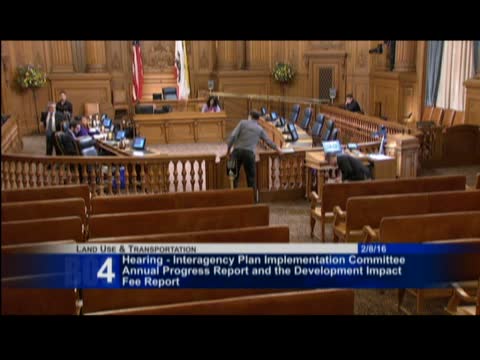
Planning presents IPIC annual report; committee files development impact fee report
Summary
Planning staff presented the Interagency Plan Implementation Committee (IPIC) annual progress and development impact fee report covering six plan areas and projected ~$250M in impact fee revenue through FY21; the committee filed the report unanimously.
Matt Snyder of the Planning Department presented the IPIC annual report describing implementation of six plan areas (Rincon Hill, Market Octavia, Eastern Neighborhoods, Transit Center, Balboa Park and Visitation Valley) along with development impact fee receipts and a multi‑year expenditure plan. Snyder said the plan areas received about $63 million through FY15 and projected a little over $250 million in impact fee revenue across the six plan areas for FY16–FY21, with roughly $173 million expected in FY17–FY18 to support priority capital projects.
Staff summarized planned uses across transit, complete streets, recreation/open space and administration categories and highlighted priority projects including light‑rail service enhancements and Van Ness BRT pedestrian improvements in Market Octavia, the 16th Street/22nd & Fillmore transit improvements in Eastern Neighborhoods, a streetscape for the Transit Center area, and parks and streetscape investments in Rincon Hill and Dogpatch. Snyder said IPIC's multi‑agency process coordinates planning, MTA, DPW, Rec & Park, and capital planning offices to align fee revenue and agency capital plans.
Committee members thanked staff; there was no public comment. The committee unanimously filed the report and the item will be memorialized in the budget process for expenditure authorizations.
Next steps: Projects identified in the report will be considered for budget authorization in the spring/summer capital budget cycle; planning staff will refine short‑term capital plans and pursue matching funds where possible.