Get Full Government Meeting Transcripts, Videos, & Alerts Forever!
Get email alerts on the Cannabis Regulation topic
No spam. Unsubscribe anytime.
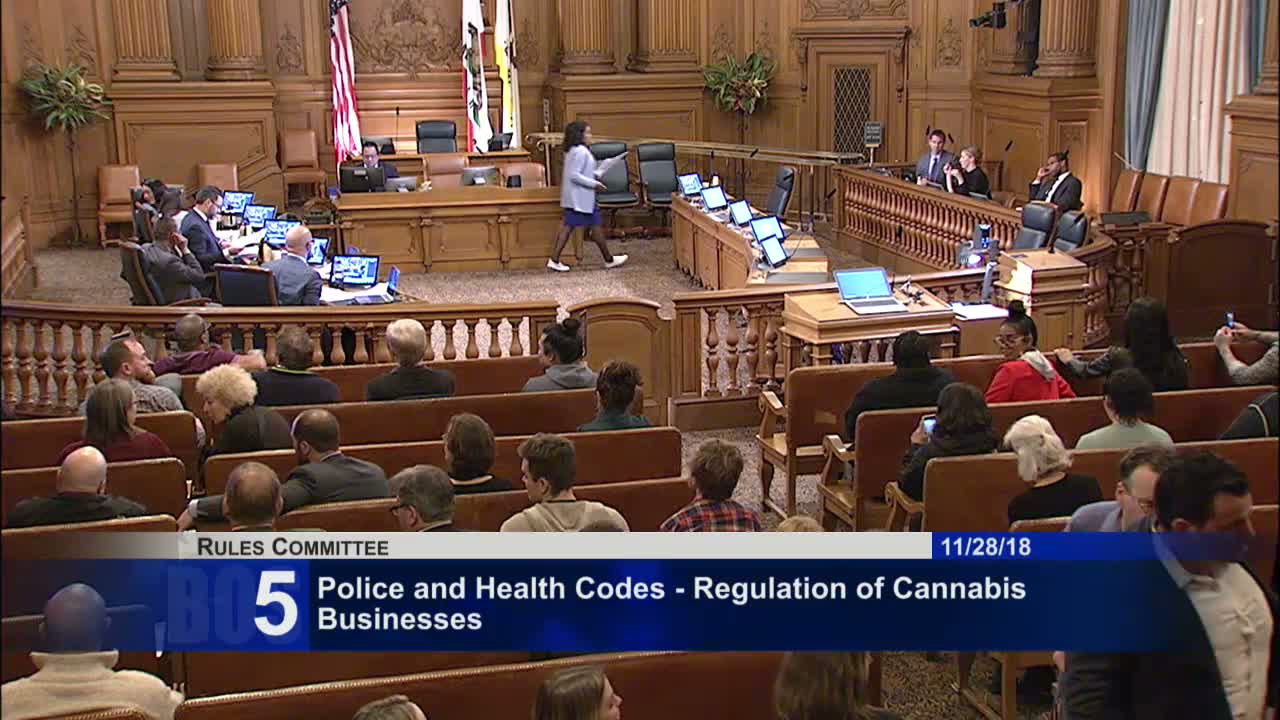
Rules Committee advances major cannabis code changes and CityGrow apprenticeship framework; items continued for further drafting
Summary
The committee considered sweeping amendments to the city's cannabis regulations: 'dynamic delivery' changes to allow in‑route manifests, multiple social‑equity eligibility and ownership amendments, and a CityGrow apprenticeship/pre‑apprenticeship hiring proposal that would require 35% of new hires to be apprenticeship graduates once state programs are approved. The committee accepted several amendments and continued the items to December 3 for final drafting.
The Rules Committee heard two linked and substantive items amending San Francisco’s cannabis regulations: (1) changes to Article 16 and related police code provisions governing commercial cannabis activity, including delivery rules and social equity eligibility; and (2) an apprenticeship and workforce proposal, branded 'CityGrow,' that ties local hiring priorities to state‑approved cannabis apprenticeships and city‑certified pre‑apprenticeship programs.
Supervisor Malia Cohen introduced an amendment to allow 'dynamic delivery,' permitting delivery employees to accept new orders while already on the road provided a manifest is created for each delivery or series of deliveries; she said the change is intended to reduce vehicle miles traveled and curb congestion while preserving state caps (e.g., $5,000 product cap per vehicle). Director Nicole Elliott (Office of Cannabis) described the equity verification process and cautioned that some applicants would need reverification if eligibility criteria change.
The committee debated several equity program adjustments introduced by multiple supervisors: limiting the number of equity applications per individual ('one bite at the apple'), an income‑eligibility floor (raising the household income threshold from 80% AMI to up to 120% AMI as a potential criterion), tighter ownership transfer rules (cumulative caps not to exceed 50%), and divestment rules allowing owners who have operated for 10 years to sell outright. Equity applicants and community advocates urged against retroactive caps that could nullify months of investment and planning; several speakers said retrospective changes would be financially damaging to applicants who had already submitted applications.
Labor and business stakeholders largely supported dynamic delivery and the apprenticeship model. The Office of Workforce Development described CityGrow: a CityBuild‑style pre‑apprenticeship pipeline that would work with community‑based organizations to recruit and train residents from communities harmed by the War on Drugs. The ordinance would trigger a 35% hiring requirement for new hires once the state approves cannabis apprenticeship standards and the city certifies pre‑apprenticeship programs.
After extensive public testimony and inter‑office discussions, the committee accepted multiple amendments, agreed to duplicate the file to allow further work on delivery safeguards and data sharing, and continued the items as amended to the December 3 Rules Committee meeting for final drafting and to align local obligations with pending state apprenticeship approvals.
What’s next: The committee continued both items to Dec. 3 for final text and implementation details; staff will work on prospective versus retrospective language for equity rules and on operational safeguards for dynamic delivery.