Get Full Government Meeting Transcripts, Videos, & Alerts Forever!
Get email alerts on the Fire Safety topic
No spam. Unsubscribe anytime.
Rules Committee backs ordinance allowing DBI/Fire to order sprinkler or alarm upgrades in buildings with recurring fire hazards
Summary
The committee voted to send a fire‑life‑safety ordinance to the full Board with a positive recommendation. The ordinance lets DBI/Fire issue a 'fire life safety notice and order' after two or more separate unabated NOVs and bars landlords from passing installation costs to tenants.
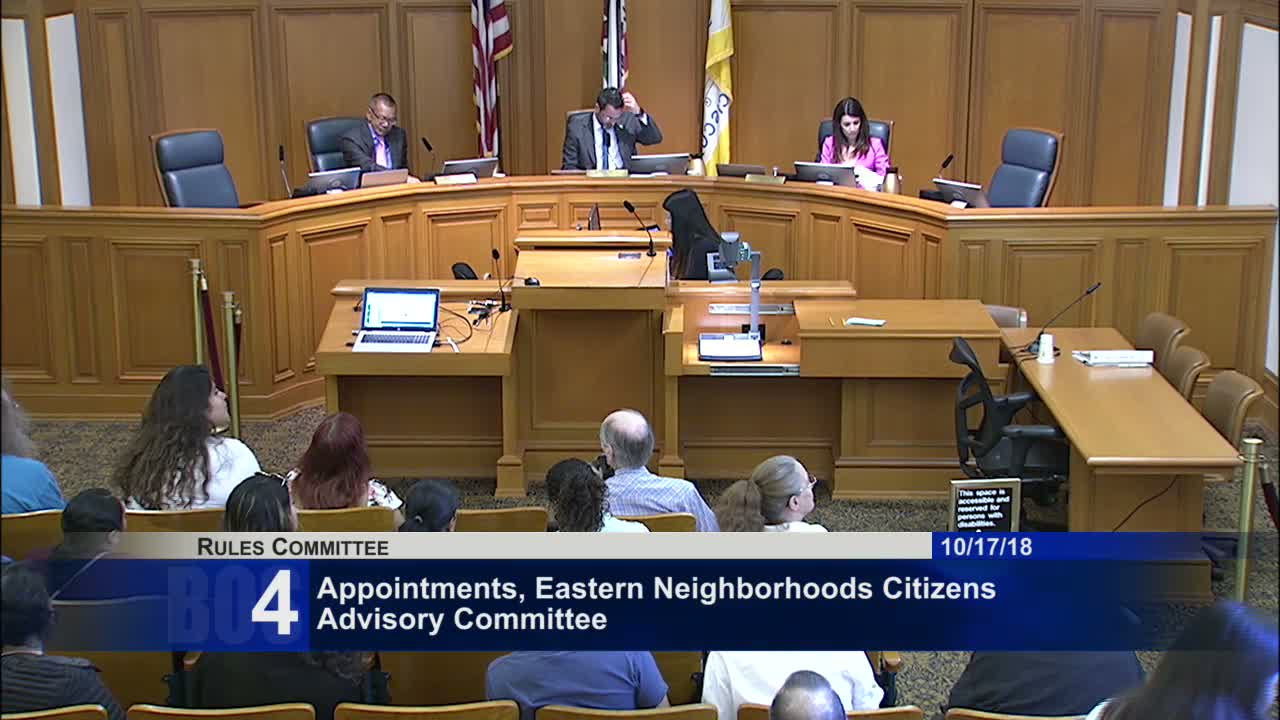
The Rules Committee on Oct. 17 voted to forward to the Board of Supervisors with a positive recommendation an ordinance that would authorize the Department of Building Inspection (DBI) and the Fire Department to require installation or upgrade of fire sprinkler or alarm systems in residential buildings of three or more units when recurring, unabated fire‑safety violations present a substantial danger to residents.
Carolyn Goosen, staff in Supervisor Hillary Ronan’s office, told the committee the ordinance is triggered when a building owner has been issued two or more Notices of Violation (NOVs) for separate fire‑safety requirements and the hazards remain unabated. In that situation, DBI or Fire (in consultation with the fire marshal) would issue a fire life safety notice and order requiring the owner to install a new sprinkler system, install a new fire‑alarm system, or make improvements to existing systems. Goosen said the administrative-code amendment would make explicit that landlords cannot raise rent to pass installation costs onto tenants.
On enforcement, Goosen said owners may appeal under DBI’s process; if they lose and do not comply, the city attorney would pursue enforcement, which can include placing a lien on the property and seeking damages up to $1,000 per day under current law in addition to implementation costs.
Tenant advocates and residents strongly supported the measure in public comment. Speakers described multiple recent residential fires — including a large fire affecting a building at Second and Mission — that caused displacement and trauma, and urged the ordinance as a life‑safety measure and a tool to hold negligent owners accountable. Rosa Maria Cavallo of the Tenderloin Housing Clinic and representatives from the Housing Rights Committee said advocates helped draft language and asked the committee to forward the ordinance.
Committee members expressed unanimous support, noting the measure provides due process while creating a path to require life‑saving upgrades. The committee voted to send the ordinance to the full Board with a positive recommendation.
The ordinance now proceeds to the Board of Supervisors; the transcript records the committee recommendation but does not record a formal roll-call vote in committee.