Get Full Government Meeting Transcripts, Videos, & Alerts Forever!
Get email alerts on the Land Use Zoning topic
No spam. Unsubscribe anytime.
Supervisors advance zoning change to require conditional use for ground‑floor office uses in three neighborhood commercial districts
Summary
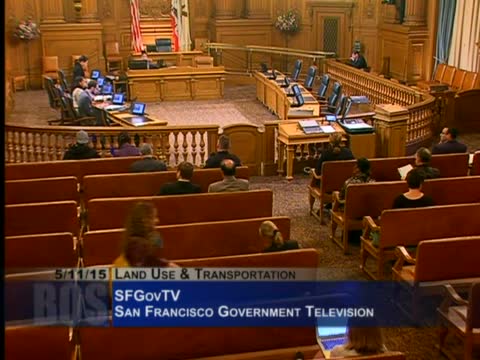
The Land Use and Transportation Committee voted to forward an ordinance requiring conditional‑use authorization before office‑type uses can occupy ground‑floor retail space in Upper Market, Castro and 20 Fourth Street NCDs, aiming to preserve active storefronts; the Planning Commission recommended approval with a study suggested for third‑story uses.
Supervisor Scott Wiener, the ordinance sponsor, told the Land Use and Transportation Committee the measure is designed to keep ground‑floor storefronts active with retail, food and other public‑facing uses rather than allowing them to convert en masse to offices. "This zoning legislation ... is designed to ensure that our Ground Floor retail space is utilized in an active way with active uses, as opposed to office uses," Wiener said.
Diego Sanchez of the Planning Department said the Planning Commission unanimously recommended the change while asking staff to study whether business and professional service uses should be principally permitted on the third story and above in the named NCDs. He told the committee the commission moved "unanimously to adopt a resolution to recommend the proposed ordinance with the following modification, to further study principally permitting business or professional service uses on the Third Story and above in the named NCDs." The ordinance would keep second‑floor offices principally permitted while requiring conditional‑use review for ground‑floor office uses.
Wiener framed the change as an effort to preserve the pedestrian vitality of corridors undergoing new development. He said Market Street and Upper Market in particular have seen significant new ground‑floor retail coming online and that unchecked conversion to office use can reach a tipping point that makes the commercial corridor less attractive for shoppers and diners.
Public comment at the podium was supportive. Willie Ratcliffe of a local publication said the approach made sense and encouraged extending similar protections more broadly. After discussion the committee adopted an amendment proposed during deliberations and, by unanimous consent, moved the item to the full Board of Supervisors with a positive recommendation.
The measure will next be scheduled for a Board of Supervisors hearing; the clerk noted items acted on at committee appear on the May 19 board agenda unless otherwise stated.