Get Full Government Meeting Transcripts, Videos, & Alerts Forever!
Get email alerts on the Budget Finance topic
No spam. Unsubscribe anytime.
City budget offices say state cuts leave San Francisco with $8 million shortfall
Summary
Controller's office staff told the Budget and Finance Committee the state budget will reduce city revenues by about $26.5 million, with $18 million in reserves set aside and an estimated $8 million remaining gap; departments outlined areas of primary impact including public health, IHSS, CalWORKs and redevelopment.
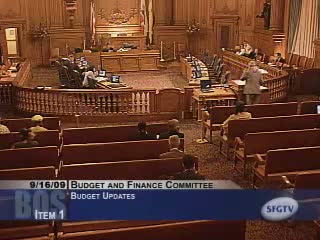
San Francisco's Budget and Finance Committee heard a report that California's budget will shave roughly $26.5 million from city finances and leave about an $8 million shortfall after a built-in $18 million reserve.
"From the information that we've received from the state and from the departments, we have a negative impact of $26,500,000," said Smita of the controller's office, who presented the updated impact analysis and told supervisors the adjusted total was smaller than an earlier estimate of about $36.7 million.
Department officials said the largest single identified item is a roughly $16 million hit to health services and public-health programs, including reductions tied to AIDS prevention and immunization and maternal-and-child-health programs. "The single largest item on our list is an $8,100,000 item ... a loss of revenues to the department," said Greg Sass, chief finance officer for the Department of Public Health, describing an item that included an extrapolation of potential Medi-Cal reductions.
Phil Arnold, deputy for finance and administration at the Human Services Agency, told the committee HSA currently lists about $9.6 million in negative impacts from the state budget. He said eligibility changes to In-Home Supportive Services (IHSS) remain uncertain because the state has not issued implementation guidelines; until those rules are issued and appeals are resolved the county cannot reliably count any savings. "To date, the state has not figured out how to implement this reduction," Arnold said.
Committee members pressed department staff on specific programs. Supervisors asked whether federal funding (including Ryan White allocations) might offset local losses and whether the loss of county pass-throughs such as Proposition 99 funds would create service cuts. Sass said a small component of Prop 99 historically has supported emergency physicians at San Francisco General (about $217,000), while other portions passed through to other hospitals.
The mayor's budget office, represented by Greg Wagner, said the mayor has 21 days to bring a plan to the board that balances the budget; the board will then have 45 days to approve, change, or take no action on that plan. Wagner told the committee staff would deliver a plan on or before October 5. The committee left the item open pending receipt and review of that mayoral plan.
The presentation and subsequent questioning highlighted a mix of known and uncertain impacts: some amounts are identified precisely in the updated analysis, while other potential offsets depend on future federal awards or pending state implementation rules. No formal cuts were adopted at the meeting; staff and the mayor's office will return with a balancing plan for board consideration.