Get Full Government Meeting Transcripts, Videos, & Alerts Forever!
Get email alerts on the State Budget topic
No spam. Unsubscribe anytime.
Comptroller: Enacted state budget could cut roughly $36.4 million from San Francisco general fund programs; broader shifts may total $123 million
Summary
The committee received a preliminary comptroller report estimating $36.4 million in identifiable general‑fund reductions and larger property‑tax shifts that could raise the city's general‑fund exposure to about $123 million. Departments warned staffing and services — including child welfare and Medi‑Cal processing — could be affected.
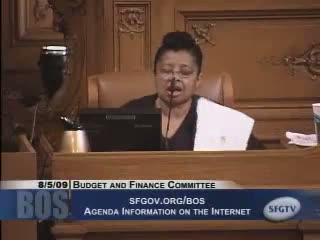
Monique Smuta, representing the Office of the Comptroller, told the Budget & Finance Committee on Aug. 5 that the recently enacted state budget will have immediate and measurable impacts on San Francisco’s finances. "There's approximately $36,400,000 of identifiable funding reductions to general fund programs," she said, identifying health, human services and potential corrections impacts as the largest drivers.
Smuta said the state also proposes substantial property‑tax shifts and a borrowing scheme that together could increase the city's exposure. She estimated a roughly $123,000,000 effect on the general fund when property‑tax shifts are included and about $146,000,000 across all funds. The comptroller’s office will issue a more detailed follow‑up report next month, which starts the mayor’s 21‑day window to propose a balancing plan and a subsequent 45‑day period for the Board to act.
Department directors described program‑level consequences. Trent Roe, director of the Human Services Agency, said administrative cuts translate directly into fewer staff: a $3,000,000 cut to child‑welfare administration would reduce roughly 21 positions, and a $2,400,000 reduction in Medi‑Cal administration funding translates to about 25 eligibility worker jobs. Roe warned that higher caseloads per worker could make timely investigations and casework more difficult.
Jenny Louie, budget director for the Department of Public Health, said an $8.6 million Medi‑Cal reimbursement reduction would leave the department providing the same services but receiving lower reimbursement; she flagged uncertainty in Office of AIDS funding and noted the department is exploring potential federal or other backfill options but that those decisions remain with the state.
During public comment Francisco De Costa urged supervisors to coordinate with state legislators and press for accountability, saying low‑income residents would bear the brunt of cuts. Supervisors also asked administration officials whether federal Recovery Act grants could help offset local shortfalls. Nani Coloretti, the mayor’s budget director, said the city received a $16,700,000 federal award on July 28 to fund three years of training and salaries for a class of 50 police officers and that the grant is intended for sworn officer hiring and training.
The committee agreed to continue budget updates and to return with a more detailed report; the comptroller’s office said it will present an updated analysis in September to inform the mayor’s balancing plan.