Get Full Government Meeting Transcripts, Videos, & Alerts Forever!
Get email alerts on the 5m Project topic
No spam. Unsubscribe anytime.
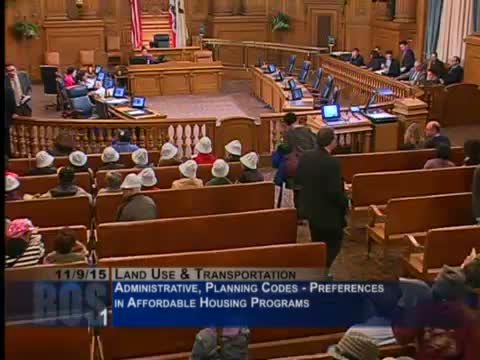
Committee forwards Fifth & Mission rezoning and development agreement after amendments amid divided public comment
Summary
After presentations and hours of public testimony both supporting and opposing it, the committee approved multiple amendments and forwarded the Fifth & Mission (5M) zoning and development agreement to the full Board without recommendation; supporters praised 40% affordability and transit improvements, opponents raised concerns about EIR adequacy, displacement and spot zoning.
The Land Use & Transportation Committee voted to advance Items 2–4, which together rezone the Fifth & Mission site (the 5M project) and approve a development agreement with the project sponsor, to the full Board of Supervisors after accepting several amendments and extensive public comment.
Supervisor Jane Kim, the lead supervisor on the item, said the developer (Forest City, in partnership with Hearst) agreed to boost on-site and nearby affordable and middle‑income housing so the project “will now build 601 market rate units and 241 affordable and middle income housing,” and that the development includes dedicated parcels and funding to accelerate a shovel‑ready family housing site (Eddie & Taylor) and senior housing parcels.
Planning staff and the planning commission supported the legislative package, citing the unusual four‑acre single ownership site, proximity to high‑capacity transit and the ability to create an acre of publicly accessible open space while preserving several historic resources. Planning Director John Rahm and former planner Kevin Guy walked the committee through the project’s design-for-development controls, public-benefits package and environmental review history.
Anne Topier of the Office of Economic and Workforce Development said the legally binding development agreement (DA) would generate approximately $73.5 million in developer fees and public benefits, donate the 12,000‑square‑foot Dempster building to the Community Arts Stabilization Trust (CAST), and front‑load funds so the TNDC Eddie & Taylor family housing site can move toward construction.
Public comment was sharply split. Supporters including transit, business, labor and arts groups praised the reduced parking ratio, pedestrian and safety commitments, open space, preservation of historic buildings and the project's affordable‑housing commitments. Walk SF and the Bicycle Coalition endorsed the project’s transportation and pedestrian safety elements; SPUR and multiple unions and arts organizations urged approval.
Opponents — including the SoMa Action Committee, Plaza 16 Coalition, Filipino community groups and other neighborhood organizers — urged a continuance, arguing the final Environmental Impact Report (EIR) is inadequate on traffic, shadow and wind impacts and that the DA reflects spot‑zoning and risks displacement. Some requested postponing the first full Board hearing to December 15 to allow independent review.
Supervisors negotiated several amendments on the record: codifying key DA obligations into the zoning/planning code, requiring periodic displacement analyses within a quarter‑mile radius, dedicating funds for small‑site acquisition and arts, and an amendment to require interagency convening before any later city department unilaterally changes approved street widths. Supervisor Wiener also won language to protect approved street dimensions from ad hoc later changes.
After amendments were adopted, the committee voted to forward Items 2–4 to the November 17 Board of Supervisors meeting “without recommendation.” Committee members stressed that the project will return to the Board for final legislative votes and that appeals on environmental approvals remain outstanding.
Next steps: environmental appeals and the full Board’s November 17 calendar will determine whether the project proceeds as amended.