Get Full Government Meeting Transcripts, Videos, & Alerts Forever!
Get email alerts on the Police Commission Appointments topic
No spam. Unsubscribe anytime.
Rules committee forwards two nominees for San Francisco Police Commission to full board
Summary
After a seven‑hour Rules Committee hearing that vetted 12 applicants, the committee forwarded John Hamasaki and Cindy Elias to the full Board of Supervisors with a positive recommendation to fill two open Police Commission seats. The committee also continued a separate campaign‑finance item for further briefing.
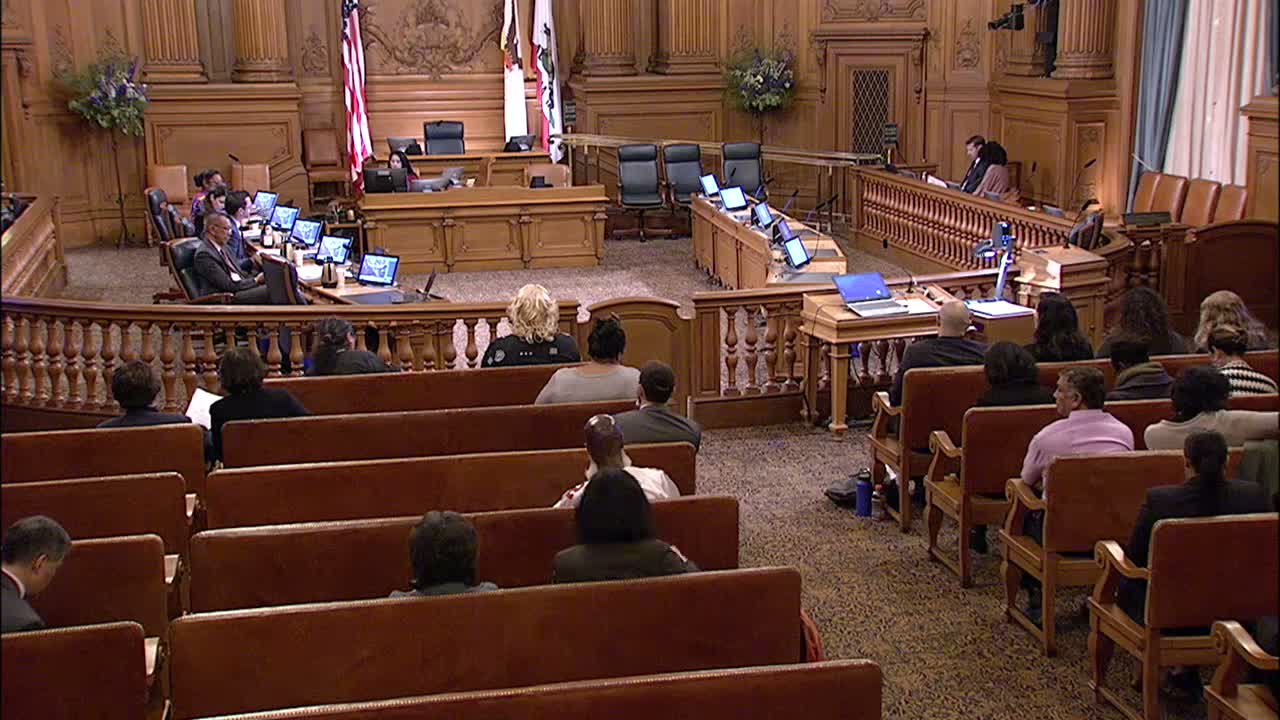
The San Francisco Board of Supervisors Rules Committee on May 1 forwarded two names to the full board for appointment to the San Francisco Police Commission, after hearing presentations and extensive questioning of 12 applicants.
The committee, which heard public testimony from community groups and individuals, moved to send John Hamasaki and Cindy Elias to the full Board of Supervisors with a positive recommendation; Supervisor Norman Yee made the motion and the committee approved it “without objection.” The nominations will be considered by the full board on its next agenda.
Why it matters: The Police Commission is the civilian oversight body for the San Francisco Police Department (SFPD). The panel is charged with reviewing discipline, setting policy and helping to implement the Department of Justice’s recommendations after its review of SFPD practices. With two seats now vacant, the new commissioners will be expected to help the body regain a functioning quorum and continue oversight and reform work.
What happened at the hearing: The Rules Committee convened a lengthy appointment hearing that tested applicants on a set of recurring issues: their understanding of the commission’s authority and disciplinary role; experience working with communities disproportionately affected by policing; familiarity with the Department of Justice recommendations and SFPD general orders; and experience with organized labor and the meet‑and‑confer process.
John Hamasaki, a criminal defense attorney and repeat applicant, stressed his courtroom experience, community ties and a persistent record of attending Police Commission meetings. At one point he recounted a high‑profile domestic‑violence case tied to the Cecilia Lam killing, saying, “What you just listened to was the sound of Cecilia Lam being murdered,” to illustrate lasting gaps in training and response to domestic violence calls. Committee members pressed him on policy positions including Proposition H and taser rules; Hamasaki said he opposed Prop H and emphasized data collection and community engagement.
Cindy Elias, a former public defender and current enforcement attorney at the California Labor Commissioner’s office, highlighted administrative‑hearing experience, participation in the LEAD (Law Enforcement Assisted Diversion) program, and cross‑agency collaboration. Elias told the committee she opposed Proposition H and urged stronger data collection on use of force, saying existing logs provide too little context to evaluate incidents and implementation of policy.
Other applicants tested a wide range of backgrounds. Applicants included city employees and advocates, former prosecutors and neighborhood prosecutors, technology and operations managers, community organizers, and former corrections officers. Supervisors repeatedly pressed applicants on specifics: how they would read and evaluate police reports, how they would approach disciplinary hearings, whether and how they had attended prior commission meetings, and how they would balance accountability with officer morale and due process.
Public comment: More than a dozen members of the public spoke during the comment period, with endorsements for a number of applicants and appeals for a commission that better reflects San Francisco’s diversity. Speakers urged attention to language access, rape‑kit backlogs, whistleblower protections for officers and community‑focused approaches to youth and mental‑health crises.
Committee action and next steps: After deliberation the Rules Committee voted to send Hamasaki and Elias to the full Board of Supervisors with a positive recommendation. The full board will consider confirmations at its next public meeting; if confirmed, the new commissioners will be sworn in and the Police Commission will move closer to having the quorum needed to conduct formal disciplinary hearings and policy votes.
The Rules Committee also considered a separate campaign‑finance ordinance (Item 2) and continued that item so staff from the Ethics Commission can brief supervisors in detail on recent technical amendments and reporting proposals.
Officials and next steps: The Rules Committee’s recommendation is advisory; final appointment authority rests with the full Board of Supervisors. The Board is expected to vote on the nominations at an upcoming meeting. The campaign‑finance item was continued to the committee’s June 13 meeting for further briefing by the Ethics Commission.