Get Full Government Meeting Transcripts, Videos, & Alerts Forever!
Get email alerts on the Vehicle License Fee topic
No spam. Unsubscribe anytime.
Committee continues local vehicle license fee ordinance to align with state bill, cites $43M revenue estimate
Summary
The committee continued a proposed ordinance to place a local Vehicle License Fee (VLF) measure on the November ballot, aligning the draft with pending state SB 10 and noting a city estimate of roughly $43–44 million in annual revenue if the state authorizes local VLFs.
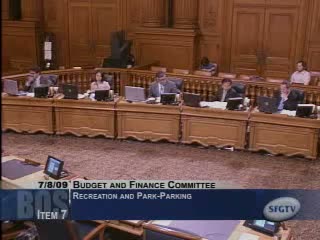
The Budget & Finance Committee continued consideration of an ordinance to adopt and submit to voters a local vehicle license fee should state law permit localities to impose such a fee. Supervisor David Chiu said the measure would restore a portion of the former 2% vehicle license fee and, if state enabling legislation passes, would impose a local VLF of up to 0.85% (the difference between the historical 2% and the current 1.15% state level), producing an estimated $43.7 million annually according to city economists.
Ted Egan of the Controller’s Office presented the department’s economic analysis, which projected a short‑run net employment boost as tax receipts sustain local public‑sector jobs and a modest negative long‑run employment effect as households adjust to higher vehicle ownership costs. Egan estimated the average annual VLF per car at roughly $80 (noting that exact amounts vary with vehicle value) and said the tax is more progressive than some other revenue options because it scales with vehicle value.
Supervisor Chiu circulated amendments to align the city ordinance with pending state SB 10, including removing language that would charge different rates for low‑emission vehicles and adding a provision that any local assessment could not be levied until at least 90 days after a state law authorizing local VLFs takes effect. Given ongoing state action, the committee agreed to continue the item for one week so the city ordinance can be made consistent with the state bill before sending a final version to the ballot.
Public commenters and stakeholders at the hearing expressed support for exploring new revenues to close budget gaps and noted the political and economic tradeoffs of tax choices. The committee’s continuation preserves the city’s ability to act quickly if Sacramento finalizes enabling legislation while allowing time to refine ballot language.
The item will return to committee next week with conforming language.