Get Full Government Meeting Transcripts, Videos, & Alerts Forever!
Get email alerts on the Parks Open Space topic
No spam. Unsubscribe anytime.
Committee advances Daggett Park package to Board, clearing way for 1-acre open space in Potrero Hill
Summary
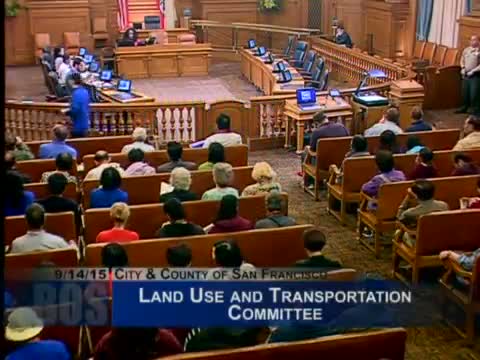
The Land Use & Transportation Committee voted to send two companion ordinances to the full Board that would rezone a former paper street on Daggett Street as public open space, transfer jurisdiction from the Port and accept a developer gift and maintenance commitments needed to build and maintain the new park.
The Land Use & Transportation Committee on Tuesday advanced a package of ordinances intended to create Daggett Park, a little under 1 acre of new open space at the foot of Potrero Hill.
Chair Supervisor Malia Cohen said the actions before the committee would deliver a promised neighborhood amenity under the Eastern Neighborhoods plan and ensure the city can finance the park’s upkeep in perpetuity. “These two items before us today will help deliver a new 1‑acre open space to the Potrero Hill community,” Cohen said.
City staff described the site as a former tideland and “paper street” that has never functioned as a public roadway. Robin Havens of the Office of Economic and Workforce Development told the committee the project will convert the Daggett corridor into two complementary areas: a publicly accessible open space and a one‑way shared public way designed to limit through traffic. “This project has been a long time in the making, and we are excited that we are finally ready to implement this community vision,” Havens said during her presentation.
Havens outlined the proposed amenities—lawn areas, seating that doubles as play structure, universal accessibility, a fenced dog run, public art and stormwater‑minimizing landscaping—and the legal and funding steps needed to complete the park. The city used State Senate Bill 815 to lift the public‑trust restrictions associated with former tidelands; Havens said the city paid $1,675,000 to fund the transfer and that a $1,600,000 state housing‑related parks grant will cover most of that cost, with a $75,000 local gap filled by funding facilitated through the supervisor’s office.
Project finance figures presented to the committee showed total improvements of roughly $4.9 million. Havens said the developer is expected to pay the cost of the shared public way (just under $1 million), leaving about $3.9 million in open‑space improvements; the Planning Commission approved an in‑kind fee waiver of about $2.3 million, and the developer proposes to gift $1.6 million and to provide perpetual maintenance through recorded legal instruments, including a maintenance declaration recorded against adjacent property and a major encroachment permit for the shared way.
Staff also said the package includes a rezone to a public‑open‑space zoning designation, a street vacation, jurisdictional transfers (real estate division for the open space and public works for the shared way) and approval of the necessary encroachment and maintenance agreements so the improvements and ongoing stewardship are protected if adjacent private land changes ownership.
After brief public comment on items 1 and 2, Chair Cohen moved to send the ordinances to the full Board with a positive recommendation. The motion passed unanimously.
The measures now go to the full Board of Supervisors for final action; staff said additional standard approvals (CEQA and General Plan review) remain part of the implementation sequence.