Get Full Government Meeting Transcripts, Videos, & Alerts Forever!
Get email alerts on the Capital Plan topic
No spam. Unsubscribe anytime.
Budget committee hears capital plan as pay-as-you-go funding is cut to $39 million
Summary
Capital Planning staff told the Budget & Finance Committee the proposed FY2009-10 pay-as-you-go program is $39 million (including $22 million from the general fund), far below the city's annual need; staff warned the unfunded backlog will grow substantially and previewed planning for an Earthquake Safety and Emergency Response bond.
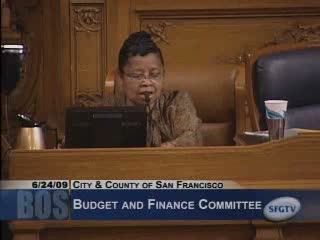
The Budget and Finance Committee heard a detailed presentation on the city's 10-year capital plan on June 24, with Bridal Strong of the Capital Planning Program laying out a sharply reduced pay-as-you-go (PAYGO) program and long-term consequences for city facilities.
Strong said the administration received about $152,000,000 in general fund capital requests this cycle and recommended a PAYGO package totaling $39,000,000, of which $22,000,000 would come from the general fund and $17,000,000 from other one-time sources including street COP proceeds, redevelopment agency funds and a sustainable-energy account. "We received a 152,000,000 in total general fund requests," Strong said in the committeeroom.
The capital planning presentation emphasized that $39 million is significantly below the city's calculated annual PAYGO need. Strong told the committee the proposed PAYGO level is roughly 58 percent below the need the city calculates each year and about 38 percent below the funding level recommended by the capital plan the board approved in April. He warned the city's facilities backlog would grow if the lower funding path is sustained and cited a projected increase in total backlog of about $4,200,000,000 by 2029 under the proposed funding scenario.
The presentation also included a preview of pre-bond planning for the Earthquake Safety and Emergency Response (EASRR) general-obligation bond tentatively proposed for the June 2010 ballot. Strong said roughly $3.8 million of a $4.8 million line item would be directed to Hall of Justice planning and to ensure a deliverable package to voters.
Supervisors used the presentation to seek detail. Supervisor Bevan Dufty and others pressed staff to explain the two lines on the backlog graph and to provide a translation of incremental annual shortfalls into long-term backlog growth. Strong and Fran Breeding of Capital Planning answered that the top "smoothed" line reflected the annual need in the capital plan while lower lines reflected the current proposed funding level and current funded projects. Breeding agreed to provide supervisors a more precise per-dollar backlog-growth figure.
Committee members and Capital Planning staff also discussed specific facility priorities that remain unfunded under the proposed budget, including cultural-center roofs, HVAC and jail fire-alarm work, animal-care roof replacement and other building-renewal needs. The chair filed the presentation for the public hearing and allowed public comment on the capital special.
The committee's discussion framed the capital budget as a choice between short-term cuts and longer-term increases in the backlog and deferred maintenance, with staff urging that some investments—particularly those that leverage federal, state or matching funds and projects that produce operating savings, such as energy-efficiency upgrades—should be prioritized.
Next steps: the committee filed the hearing and will consider related capital items and bond planning as the budget review continues.