Get Full Government Meeting Transcripts, Videos, & Alerts Forever!
Get email alerts on the Housing Initiative topic
No spam. Unsubscribe anytime.
Rules Committee files ‘Housing for All’ grocery‑rent tax measure to June ballot
Summary
The Rules Committee filed Supervisor Asha Safai’s proposed charter amendment to impose an additional 1.7% gross‑receipts tax on certain commercial rents to fund homelessness services, SRO preservation and middle‑income housing; departments projected about $70M–$100M annually and argued the measure would fund acquisition, rent subsidies and supportive housing.
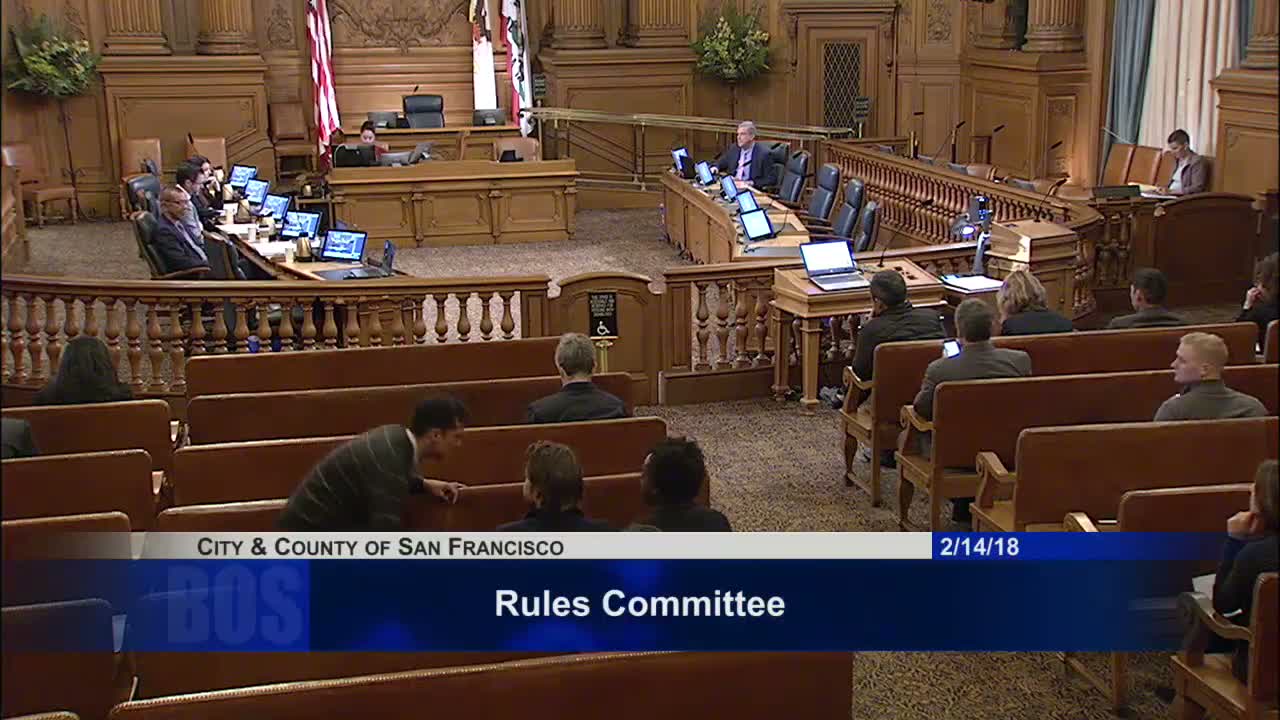
Supervisor Asha Safai urged the Rules Committee on Feb. 14 to place a charter amendment called “Housing for All” on the June ballot, saying the city faces a “crisis of dramatic proportions” in both housing and homelessness.
The measure would impose an additional 1.7% tax on the gross receipts from commercial leases (with exemptions for nonprofit tenant space, retail and certain production/distribution/repair uses). Kate Hartley, director of the Mayor’s Office of Housing and Community Development, told the committee the tax would generate about $1 billion by the date listed in the proposal ('02/1930' in the presentation) and roughly $70M–$100M annually in earlier years. Hartley said most funds would be used to acquire and rehabilitate rent‑controlled buildings, preserve SROs, provide rent subsidies for extremely low‑income seniors and produce or preserve middle‑income units (targeting roughly 80% of area median income).
Jeff Kositzky, director of the Department of Homelessness and Supportive Housing, said about 45% of the revenue would be dedicated to homelessness services, and outlined expected uses including rapid rehousing for transition‑age youth, 350 permanent supportive housing units, and permanent funding for navigation centers. He cited the city’s Jan. 2017 point‑in‑time count (7,499 people) and said the measure would help “assist nearly 25,000 people” over the life of the tax.
Speakers from neighborhood groups, labor and homelessness service providers — including Chinatown Community Development Center, the Laborers and Teamsters, Hamilton Families and Mercy Housing — urged support, citing displacement, rising SRO speculation and long affordable‑housing wait lists. The Chamber of Commerce’s Jim Lazarus urged caution, calling attention to the measure’s narrow revenue base and potential effects on the broader business tax system.
Chair Safai asked for the committee to “file the hearing” so the initiative can move forward; the clerk recorded the hearing as filed without objection. Deputy City Attorney John Givner advised the committee on procedural language and explained how competing measures on the same subject would be resolved by which measure receives more votes if both pass.
What happens next: Filing the hearing sends the charter amendment forward in the process for placement on the June ballot. If the measure is certified for the ballot and voters approve it, the city will implement the spending plan outlined in the charter amendment and the implementing regulations set by the board and departments.