Get Full Government Meeting Transcripts, Videos, & Alerts Forever!
Get email alerts on the Dbi Fee 52 topic
No spam. Unsubscribe anytime.
Subcommittee forwards $52 per‑unit fee for 1–2 unit rentals to fund housing inspections after broad tenant testimony
Summary
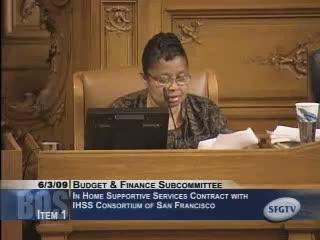
After hours of department briefings and repeated testimony from tenants and SRO advocates, the Budget and Finance Subcommittee voted 2–1 to send a proposed $52 annual fee on one‑ and two‑unit rental dwellings to the full Board with recommendation; sponsors said proceeds will fund complaint‑driven housing inspections and related outreach.
The San Francisco Budget and Finance Subcommittee voted on June 3 to forward to the full Board a proposed ordinance that would assess a $52 annual fee on one‑ and two‑unit rental dwellings to recover the cost of housing code enforcement.
Supervisor David Campos, the measure's sponsor, told the committee the fee is intended to address a shortfall identified in a 2008 Department of Building Inspection (DBI) fee study and to spread costs more fairly. "The increase that has been proposed is a fee of $52 per rental dwelling for 1 and 2 rental units," Campos said, arguing the charge mirrors fees already applied to buildings with three or more units and would prevent owners of larger properties from subsidizing inspections of smaller properties.
DBI Chief Housing Inspector Rosemary Boskey said the fee would pay for complaint intake, recordkeeping, the inspection and reinspection process, translation and outreach services, and the database needed to identify one‑ and two‑unit rentals. "This is a complaint referral driven service. It does not include the routine inspections that are done in the common areas of apartment buildings and hotels," Boskey said. She estimated the measure would generate roughly $1,000,000 in the first year and grow to more than $2,000,000 as the city develops a rental registration database.
Budget analyst Michael Rose presented the department's unit estimate and a higher revenue projection: based on about 60,000 one‑ and two‑unit rentals, the fee could yield approximately $3,000,000 annually. DBI staff cautioned that accurately identifying affected properties will take time and that early years will likely undercount units until the database is developed.
The committee also heard more than three hours of public comment, principally from tenant representatives, SRO collaborative staff and housing advocates. Speakers described health and safety problems in single‑room occupancy houses and other small rental buildings and said housing inspectors and tenant‑based outreach programs are essential supports for elderly, disabled and low‑income tenants. "These people do a lot of good for us," said Sister Elaine Jones, a tenant representative who said she speaks for seniors relying on inspections and tenant advocacy. Jeff Buckley, director of the Central City SRO Collaborative, said the modest fee is far less than the value of services provided: "We deal and abate close to 1,400 issues...If you lose the SRO collaboratives and you lose the housing inspectors, you're taking away a vast safety net for residents," he said.
Opponents in public comment focused on implementation details and on whether the fee would be used to restore layoffs DBI has already announced; some speakers accused the department of inconsistent planning and urged stronger commitments to preserve inspector positions and SRO collaborative funding.
After discussion and follow‑up questions about cost recovery procedures (including liens and director's hearings), the subcommittee voted to forward the ordinance to the full Board with recommendation. The roll call showed Supervisors Ross Mercarimi and John Avalos voted Aye; Supervisor Edie Chiu voted No (motion passed 2–1). The vote advances the ordinance to the full Board, where supervisors will decide whether to enact the code amendments.
The committee record shows DBI plans to pursue legislation to recover verified administrative costs sooner in the enforcement process; DBI also indicated it will coordinate with the Rent Board and other agencies to assemble the rental database needed to capture all affected properties.
The subcommittee's action does not itself change code or levy a fee; it sends the proposal and the record of public testimony to the full Board for final consideration.