Get Full Government Meeting Transcripts, Videos, & Alerts Forever!
Get email alerts on the Transbay Platforms topic
No spam. Unsubscribe anytime.
Committee continues Transbay platform-compatibility discussion as Caltrain weighs vehicle modifications
Summary
Caltrain staff described options to preserve future boarding compatibility with high-speed rail — 25-inch vs. 50-inch platforms, additional doors or movable 'traps' — but said funding for platform changes is not yet committed; the committee continued the item and took public comment.
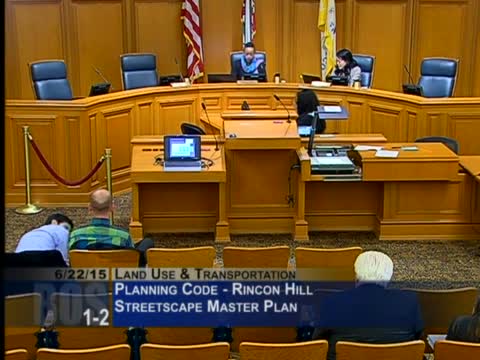
The Land Use & Transportation Committee heard a continuation of a technical discussion on platform compatibility for the Transbay Transit Center, focusing on whether Caltrain’s future electric multiple units (EMUs) can be procured so they do not preclude future level boarding common with high-speed rail.
Casey Fromson of Caltrain described rising ridership and the agency’s timeline for electrification and new vehicles. "Electrification will be a key part in making sure that we are getting our trains in and through the peninsula, faster," Fromson said, and framed level boarding and longer trains as tools to expand capacity. He and technical staff summarized procurement milestones and said Caltrain plans to release an RFP for EMUs in July to keep a goal of electrified service by 2020.
Caltrain’s technical presentation, led by another staffer, outlined two principal options to preserve future compatibility: (A) procure vehicles with two sets of doors (upper and lower) that could be used later as platforms are raised, or (B) use so-called "traps" — deployable plates and steps that allow a single door to serve different platform heights. The presenter said traps would add maintenance burden, increase dwell time and complicate circulation (including bike boarding), while two sets of doors reduce future retrofit risk but entail some seat loss inside vehicles.
On funding, Caltrain staff said there is currently no money in its budget for platform-height modifications and that changes to platforms were not included in the current environmental clearance. Staff asked High-Speed Rail to consider funding vehicle modifications that would preserve future options. "We are trying not to preclude a future that’s not quite defined," Fromson said of the procurement approach.
Public commenters included Jim Lazarus of the San Francisco Chamber of Commerce, who urged common level boarding at the Transbay terminal to preserve operational flexibility and warned that an electrified Caltrain without compatible platform arrangements could leave a station underused. One commenter urged national-level coordination and raised concerns about the Transbay alignment’s ability to support tail tracks and train storage.
After public comment, a motion was made to continue item 3 to the call of the chair; the committee carried the motion without opposition. No final technical decision on platform height or procurement modifications was taken at this meeting; Caltrain staff will continue stakeholder outreach and return with further analysis as procurement milestones approach.