Get Full Government Meeting Transcripts, Videos, & Alerts Forever!
Get email alerts on the Community Benefit Agreement topic
No spam. Unsubscribe anytime.
Residents press for transparency as committee reviews Hunters Point community benefits funds
Summary
A lengthy hearing on the Bayview Hunters Point Core Community Benefits Agreement (CCBA) exposed community frustration over slow disbursement and limited transparency of roughly $28.6 million pledged for housing and nearly $9 million for workforce programs; committee members urged the Implementation Committee and signatories to address governance, fill a vacant community seat and accelerate grants. The committee continued the hearing to the call of the chair.
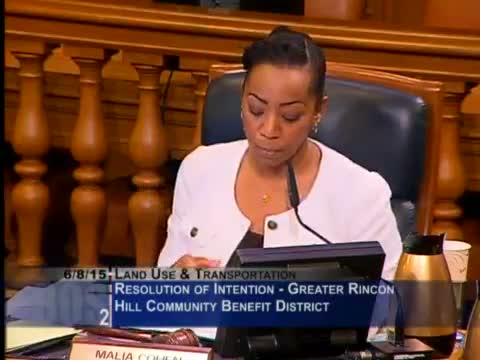
Chair Supervisor Malia Cohen convened a hearing on June 1 to review implementation of the Bayview Hunters Point Core Community Benefits Agreement (CCBA) and to receive updates from the Implementation Committee (IC), the developer and fiduciary managers.
The CCBA, a private agreement negotiated in 2008 between Lennar Urban (the master developer) and a coalition of community signatories commonly referred to as 80/10 (Alliance for District 10 groups), committed roughly $28.6 million to a Community First housing fund and about $8.9 million to workforce development. OCII staff noted that the CCBA is a private agreement and that the Office of Community Investment and Infrastructure is not a party to the IC’s administration or fund distribution.
LaShawn Walker, director of community affairs for Lennar Urban and temporary chair of the IC, reported that Lennar has advanced payments and that more than $5 million has been committed to date; San Francisco Foundation staff explained their role as fiduciary for advanced funds and summarized grantmaking to date. Foundation presenters described how the IC/ foundation vet grants via subcommittees and that technical assistance funds cover administrative support including a coordinator and consultants. They also noted fees charged for fund management (fiscal management fee plus external fund manager fees) and provided year‑by‑year accounting showing that millions remain available. Foundation staff said that some grants — including a rental assistance program intended to slow displacement — remain pending because the IC has not agreed on special conditions and budget levels.
Supervisors and community members pressed several themes: (1) why a large share of CCBA funds remains unspent years after the agreement, (2) the IC’s voting rules and governance structure that require agreement among signatory groups for grant approvals, (3) the vacancy of a community member seat and stalled nomination process, and (4) a perceived lack of transparency about IC deliberations. Community speakers from Alice Griffith and other Bayview neighborhoods recounted local needs for job pipelines, youth programs and rental assistance, urged faster distribution to community priorities and raised allegations about unpaid subcontractors and barriers for local small contractors.
LaShawn Walker and SFOP representatives acknowledged internal challenges, pledged to improve outreach and invited residents to IC‑related meetings. SFOP and other signatories said some meetings are open and that steps are being taken to post minutes and improve communications. The IC and the foundation said that grants have moved forward for youth employment, financial empowerment and a small contractor mobilization loan program, but that additional agreements have been delayed by internal IC disagreement over terms.
Supervisors asked staff to clarify legal and accountability questions around a private CCBA tied to public approvals, and Chair Cohen requested steps to fill the vacant community seat given its role as an access point for neighborhood voice. The committee voted to continue the hearing to the call of the chair so that outstanding stakeholders who could not attend could be present for further discussion.