Get Full Government Meeting Transcripts, Videos, & Alerts Forever!
Get email alerts on the Street Bond topic
No spam. Unsubscribe anytime.
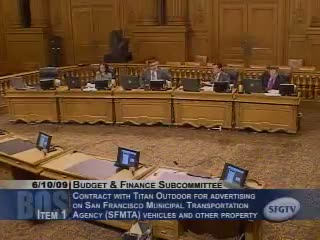
Supervisors debate $388M streets bond; committee continues item for one week to refine undergrounding and bike priorities
Summary
The subcommittee reviewed a proposed $388 million general‑obligation bond to fund street resurfacing, sidewalk/ADA repairs, streetscape work and $20 million for utility undergrounding; planners said it would create nearly 3,000 jobs. Supervisors and advocates pressed for explicit prioritization for bike routes, geographic equity, and criteria for undergrounding; the committee continued the item for one week to craft amendments.
Department of Public Works Director Ed Ryskin presented a proposed $388 million general‑obligation bond intended for street resurfacing, street‑structure repairs, ADA curb ramps, sidewalk fixes and streetscape improvements, including an additional $20 million to support utility undergrounding. Ryskin said the program would address a multi‑hundred‑million backlog and could create nearly 3,000 jobs if approved and implemented.
Ryskin described prioritization criteria that emphasize high‑use arterials, Muni routes and areas identified in neighborhood plans. He told the committee the bond package was calibrated to fit projected local, state and federal funding sources and would be a major source of capital funding in the city’s 10‑year plan.
Bike and pedestrian advocates urged stronger safety prioritization. Leah Sheyim of the San Francisco Bicycle Coalition said the coalition supports the measure but asked that “at least 30% of blocks that are resurfaced under this bond” be on high‑priority bike routes to reduce injuries and improve safety. DPW staff and other public commenters warned that mandatory undergrounding requirements tied to resurfacing could delay projects and increase costs; proponents said undergrounding improves safety and aesthetics and can be coordinated with streetscape projects.
The budget analyst and controller’s office provided household cost context: a single‑family home assessed at $500,000 with a standard homeowner exemption would face an estimated annual tax increase (based on an earlier $368M figure) of about $103.71, though that projection was adjusted when the bond amount changed to $388M. DPW said the schedule contemplated three issuances starting in 2010 and that, under that plan, the city could hold property tax rates near 2006 levels for the duration of the bond issuances assuming other measures do not add additional debt.
Supervisors focused on equity of undergrounding distribution across supervisorial districts, the mechanics of securing utility cooperation, and practical tradeoffs between doing shallow resurfacing now versus deeper, more expensive reconstruction later. DPW representatives said they would integrate prioritization with utility coordination and noted lessons learned from prior undergrounding programs.
Given the number of unresolved details—particularly how undergrounding dollars will be layered into the streetscape category, and how bike‑route prioritization will be institutionalized—the committee agreed to continue the item for one week so staff can return with proposed ordinance language and amendments for the full Board.