Get Full Government Meeting Transcripts, Videos, & Alerts Forever!
Get email alerts on the Budget Set Asides topic
No spam. Unsubscribe anytime.
Committee adopts clarifying amendments and continues contentious set-aside reform to allow more community consultation
Summary
Supervisor Tang introduced a charter amendment to pause growth of voter-adopted set-asides when a projected deficit exceeds $200 million and to return certain unspent funds to the general fund with capital and children's-fund exceptions; the committee adopted clarifications after lengthy public testimony and continued the item for further refinement.
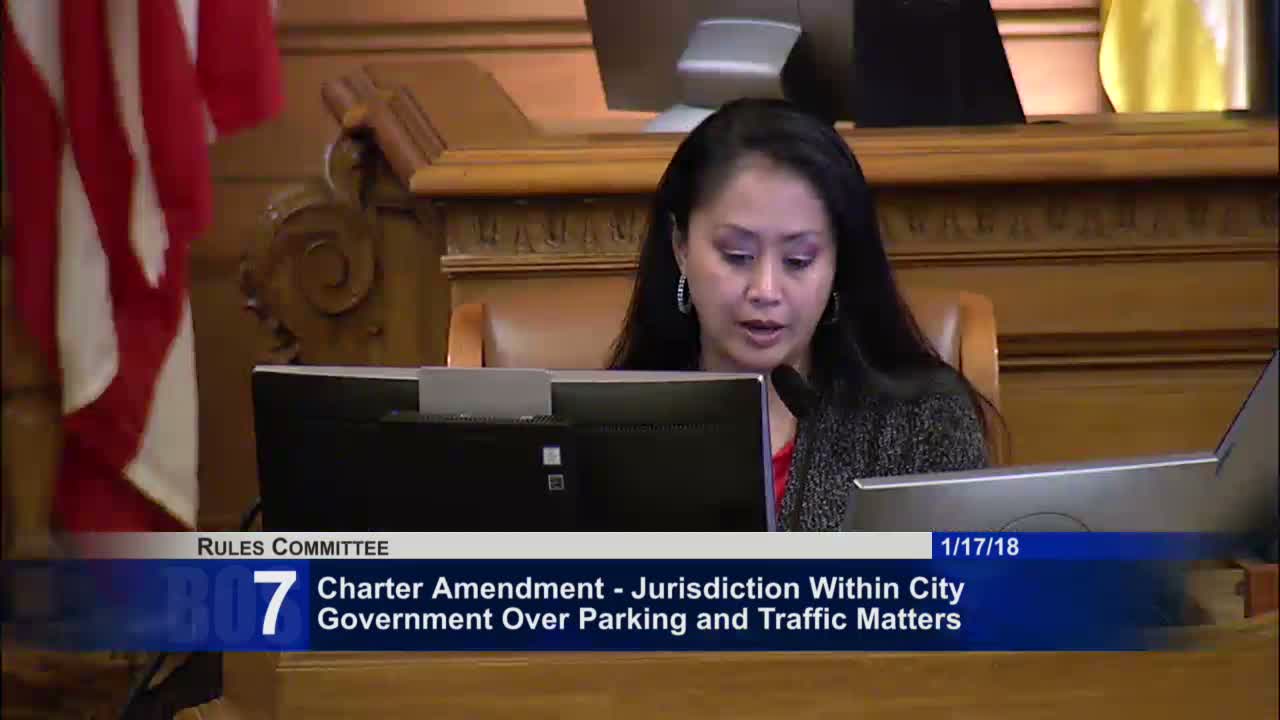
Supervisor Tang presented Item 8, a charter amendment aimed at set-aside and baseline reform. The proposal contains two core provisions: (1) when the city's projected budget deficit exceeds $200 million at the point of the joint report, planned growth in certain voter-adopted set-asides would be suspended (not the base amounts already in the charter), and (2) unspent baseline and set-aside funds could be returned to the general fund, with clarifications and exceptions for capital projects and children's baseline funds. Tang and co-sponsor Supervisor Peskin said the measure seeks budget discipline and flexibility, not cuts to existing baselines.
Public comment was extensive and strongly critical from many nonprofits, service providers, the Dignity Fund Coalition, homeless-services organizations, library advocates, youth and disability groups, and the Budget Justice Coalition. Testimony warned the charter amendment would undermine voter priorities, harm vulnerable populations, and create instability for nonprofits that receive multiyear grants and encumbrances. The Youth Commission and other community bodies formally opposed the measure. Several speakers urged slower deliberation and collaborative reform rather than an immediate ballot placement.
Controller's office staff and Supervisor Tang clarified that once grants and contracts are entered, amounts are encumbered and would not be subject to clawback under the proposed language. Tang circulated and the committee adopted a set of amendments (capital exceptions, children's baseline carve-out, and clarified controller calculation methods) and agreed to continue the item to the Jan. 24 meeting so sponsors can refine language and meet with community stakeholders.