Get Full Government Meeting Transcripts, Videos, & Alerts Forever!
Get email alerts on the Water Rates And PUC Budget topic
No spam. Unsubscribe anytime.
PUC outlines flat operating budget but proposes multi-year water rate increases to meet capital needs
Summary
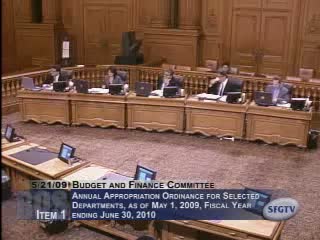
The San Francisco Public Utilities Commission presented a mostly flat operating budget May 21 and defended proposed water and wastewater rate increases to fund long-term capital projects, conservation programs and customer-facing technology, while offering targeted low-income assistance measures.
The Public Utilities Commission told the Board of Supervisors’ Budget & Finance Committee on May 21 that its operating budget is largely flat while capital needs are driving proposed rate increases set to take effect July 1, 2009. "Our operating budget is basically flat and we're looking at revenue-funded capital going up," said Mister Harrington, general manager of the PUC, describing a multiyear plan to rebuild aging water and wastewater infrastructure.
The PUC said the proposed rate path is intended to support the Water System Improvement Program and other capital projects rather than growing operating costs. Harrington said the typical single-family household would face an average bill increase equivalent to about 32¢ a day next year and that single-family bills would rise roughly 10% per year over five years under the proposal; multifamily customers would see a higher increase under a required rate-study realignment. "These rates are not to pay for a burgeoning increase in operating costs," Harrington said, adding that much of the increase funds long-term seismic and reliability work.
Why it matters: the capital program the PUC plans requires borrowing and multi-year revenue, and supervisors were focused on the distributional effects on low-income residents and multifamily customers. The commission said it raised conservation spending from about $2.2 million to $5.8 million, directed $1.3 million to a low-income program and will continue a general-fund subsidy and other measures to protect vulnerable customers. Harrington described a direct-install high-efficiency toilet program designed to reduce household usage and bills; the PUC expects to install roughly 3,500 toilets this year to limit the impact of rate changes on enrolled low-income households.
Supporting details: the PUC outlined a suite of capital and programmatic efforts tied to the rates. On the water side, staff described a policy of no increased watershed withdrawals through 2018, investments in recycled water and local groundwater wells, and a renegotiated long-term wholesale contract with suburban customers that changes how capital costs are recovered. The commission highlighted major wastewater projects, including a supplemental appropriation that would add about $19 million to a sewer system improvement program and a planned rebuild of a Sunnydale-area sewer tunnel to address flooding and odor control.
The PUC also emphasized customer-facing technology and transparency initiatives. Harrington said the commission will seek a supplemental appropriation to begin installing up to 180,000 automated (AMI) meters and is proposing a modern laboratory information management system to replace a 13-year-old proprietary system and make water-quality test results more readily accessible online.
Public comment and next steps: union-represented lab staff raised concerns that they were not consulted on the new lab system and urged more discussion about operational impacts and costs. The committee agreed to continue final action on the PUC budget to a June 3 hearing to allow the PUC and budget analyst to resolve outstanding recommendations and to provide additional reporting on the WESIP program and proposed supplemental appropriations.
What’s next: the committee moved, without objection, to continue the PUC budget to June 3 so the commission can return with any supplemental appropriation requests and additional details requested by supervisors.