Get Full Government Meeting Transcripts, Videos, & Alerts Forever!
Get email alerts on the Mta Budget topic
No spam. Unsubscribe anytime.
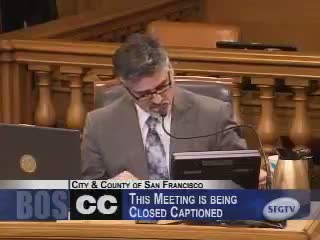
Budget committee forwards MTA budget to full Board after split debate over fares and work orders
Summary
After a day of testimony and public comment, the Board of Supervisors’ budget committee voted 3–2 to forward a recommendation on a motion that would have rejected the MTA’s proposed FY2009–10 budget. Supervisors and riders clashed over fare increases, work orders and whether the deal reached the night before had been sufficiently public.
The Board of Supervisors’ Full Budget Committee voted to forward to the full Board a recommendation on a motion that would reject the San Francisco Municipal Transportation Agency’s proposed fiscal year 2009–10 budget, after a split committee debate and public comment.
Chair Supervisor John Avalos opened the discussion by saying he remained unsatisfied with the outcome of recent negotiations over the MTA budget and wanted more time to pursue changes. Supervisor Carmen Chu said the agreement reached the previous night added about $10.3 million to delay fare increases for seniors and disabled riders and added funding to re-invest in the Transit Effectiveness Project (TEP); she moved to table the rejection and urged colleagues not to seek wholesale disapproval without considering downstream general-fund impacts.
Public speakers urged greater transparency. David Pilpel said the agreement “was unclear and unsatisfying” and urged that its details be made public so advocates could review them. Francisco de Costa criticized the process as “arm twisting” and urged salary reductions for agency executives rather than fare increases, asserting the MTA director earns “over $300,000.”
Opponents and supporters of the tabling strategy framed the choice differently. Supervisor Bevan Dufty argued the MTA general manager, identified in discussion as Nathaniel Ford, already has delegated authority to implement many changes and that engaging the agency’s leadership (including the CFO, Sonali Bose) would be a more productive way to secure specific fixes without triggering damaging general-fund reductions. Supervisor David Campos countered that the threat of rejection was a necessary tool to secure concessions and pressed that roughly $63 million in work orders remain from a previously proposed $83 million reduction—an amount he said warranted further scrutiny before accepting any fare increases.
Committee members also pressed MTA staff on environmental-review law. Judson True of the MTA told the committee that the board’s April declaration of fiscal emergency “does in fact fulfill the requirements under CEQA for fare increases and service reductions,” but he added that the broader TEP will require CEQA review and that the agency would work with the City Attorney to clarify where CEQA is triggered.
After public comment closed, the committee took two procedural votes. A roll-call vote to forward the matter to the full Board with the committee’s recommendation carried with three ayes and two noes. The committee record shows Supervisors Mercarimi, Dufty and Avalos recorded aye votes; Supervisors Chu and one other recorded no votes. The motion to forward passed and Item 2 will be considered by the full Board at its next regularly scheduled meeting.
What happens next: the full Board must act within statutory deadlines if it wishes to reject amendments to the MTA budget; the deputy city attorney reminded members the Board’s last regular meeting to act would be the next Tuesday (the staff memo said the deadline is 30 days from receipt of amendments received May 1). MTA staff said they will return with additional detail on the service enhancements and how TEP changes will be implemented.
The committee’s debate highlighted tensions between using formal rejection as leverage and pursuing negotiated, agency-led fixes—a dynamic supervisors said will reappear during final budget deliberations in June.