Get Full Government Meeting Transcripts, Videos, & Alerts Forever!
Get email alerts on the Child Support topic
No spam. Unsubscribe anytime.
San Francisco Child Support Agency outlines cuts, new outreach after $3.1M state funding reduction
Summary
The Department of Child Support Services told the Budget & Finance Committee its caseload is about 19,111 families and collections topped $34 million in FY2009; a state‑mandated 21% reduction created a $3.1 million shortfall, but the department says internal savings and restored state funds have largely addressed the gap.
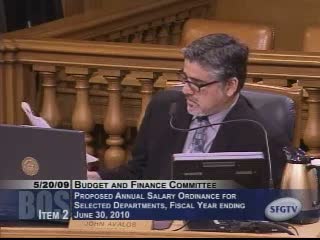
The San Francisco Department of Child Support Services told the Budget & Finance Committee on May 20 that it is shifting from a punitive enforcement model to a ‘social justice’ approach and has stabilized its budget after a near‑term funding shock.
Miss Boyle, speaking for the department, said the agency manages roughly 19,111 cases and collected more than $34 million in fiscal 2009, with 77 percent of every dollar — about $26.2 million — going directly to families. She said the program receives no local general fund support and is fully funded by federal and state sources.
The department reported that in February state partners required counties to reduce funding assumptions by 21 percent, a change that translated to a $3.1 million shortfall for San Francisco and would have required eliminating roughly 30 full‑time positions and regionalizing services. Miss Boyle said the department quickly identified three funding solutions: internal savings that eliminated 14 vacant positions (about $1.4 million), $340,000 restored by the state, and $1.2 million in ongoing funding from a state agreement to pay for the city’s automation and training expertise.
Miss Boyle described programmatic changes intended to improve outcomes and limit enforcement harms: realistic orders tied to earnings, targeted outreach to employers, a jail outreach project begun in May 2008 that identified more than 800 incarcerated parents with roughly $8.1 million in combined arrears, and initiatives such as SCORE, EPIC, NET and GED partnerships to support noncustodial parents’ employment and training. “Our goal…is to help families and put families first,” Miss Boyle said.
Supervisors asked whether the jail outreach work is local or statewide; Miss Boyle said it is a local initiative the state is watching closely. Committee members pressed on reserve practices and whether the department could use cash‑based budgeting to prepay rent or retirement health obligations; Miss Boyle said the agency has been strategically paying allowable next‑year costs from current allocations for the past three fiscal years.
The committee moved the item forward to the full Board without recorded objection; the department indicated it would return as needed if further technical adjustments arise from labor negotiations.