Get Full Government Meeting Transcripts, Videos, & Alerts Forever!
Get email alerts on the Cannabis Regulation topic
No spam. Unsubscribe anytime.
Rules committee advances broad cannabis ordinance, adopts equity framework and raises local‑hire target
Summary
The San Francisco Rules Committee accepted a set of equity amendments aimed at prioritizing applicants harmed by the "war on drugs," and tentatively adopted labor and local‑hire changes while continuing technical language for later review. Public comment strongly favored temporary permits, on‑site consumption and expanded supports for small and equity applicants.
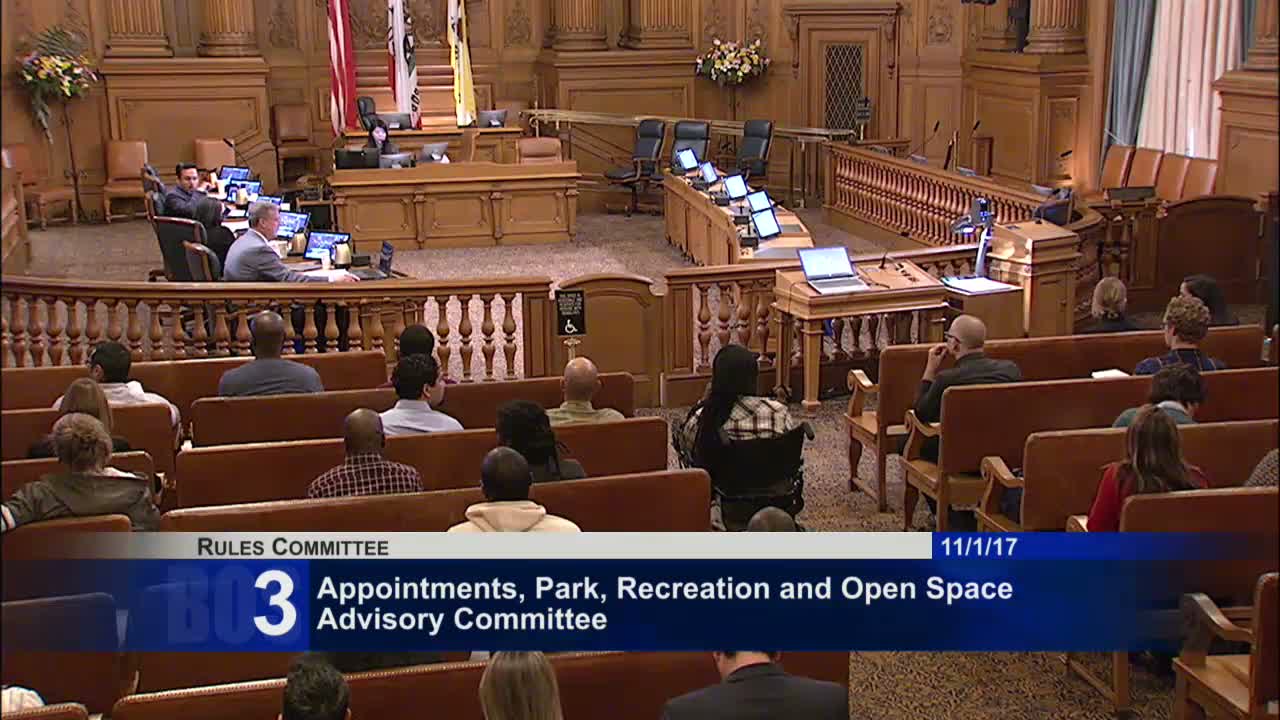
The San Francisco Board of Supervisors Rules Committee on Nov. 1 advanced major changes to a draft ordinance that would regulate the commercial cultivation, manufacture, testing, sale and delivery of cannabis in the city while adopting new equity and labor provisions.
Supervisor Asher Safaie, chair of the committee, framed the hearing as the start of a process to implement state law while addressing local concerns: “This is the first of many that we will have as we move toward the finish line,” he said, placing emphasis on equity and public‑health protections.
The committee accepted an equity package introduced by Supervisor Malia Cohen’s office that sets eligibility criteria for priority treatment. Brittney Chiquata, presenting the amendments, said qualifying operators would need a cumulative five years’ residence during specified low‑income census‑tract years, limited assets, and at least two of four additional conditions such as household income at or below 80 percent of San Francisco AMI, a qualifying conviction during 1971–2009, documented housing insecurity since 1995, or a close family member’s qualifying conviction. The committee approved those amendments in a roll call vote 2–1; Supervisor Sandy Lee Feuer voted no.
The hearing was dominated by public comment from hundreds of residents, patients and industry representatives who urged three recurring changes: a two‑step registration so existing small operators can remain active during transition; temporary conversion permits to let current medical cannabis dispensaries sell adult‑use products on Jan. 1; and authorization of on‑site consumption spaces so visitors and residents have legal places to use cannabis.
“I'm speaking here today on the equity portion… I have two cannabis felonies,” said Joshua White, who identified himself as an operator and urged broad eligibility for the equity program. Labor representatives urged the ordinance require robust workforce protections and benefits for growers and production workers.
Supervisors also debated operational controls raised by industry and community speakers. Delivery operators sought dynamic manifests and higher per‑case limits to serve dispersed neighborhoods. Small manufacturers asked for shared co‑located spaces to address high San Francisco rents. Several speakers urged reducing a 1,000‑foot school buffer to the state’s 600‑foot standard to increase available sites for equity applicants; others asked to retain a 1,000‑foot buffer to protect children and neighborhood quality.
Supervisor Jeff Sheehy read labor and neighborhood‑notice amendments into the record, including a requirement that applicants with more than 10 employees file labor‑peace agreements and an initial local‑hire target tied to business work hours. After discussion committee members agreed to raise the proposed local‑hire target from 30 percent to 50 percent of business work hours; the committee then continued the item to the call of the chair to finalize language and other technical edits.
Nicole Elliott, director of the newly formed Office of Cannabis, previewed a report prepared with the Human Rights Commission and the Controller recommending incubator programs, banking access, outreach and data collection. She said the report would be posted later the same day and that the report’s recommendations were intended as a high‑level framework to help guide specific policy choices.
What happened next: the committee accepted the equity amendments and placed the broader ordinance back on the calendar for additional drafting and a follow‑up rules‑committee meeting. Supervisors said they expected further tweaks — including narrowing eligibility language and finalizing labor and local‑hire mechanics — before the ordinance reaches the full Board of Supervisors.
The committee’s actions do not yet finalize policy. The accepted amendments set an initial political and procedural framework for San Francisco’s cannabis program; final rules, numerical thresholds and enforcement detail are expected in subsequent meetings and ordinance drafts.