Get Full Government Meeting Transcripts, Videos, & Alerts Forever!
Get email alerts on the Infrastructure Funding Gap topic
No spam. Unsubscribe anytime.
Land Use committee hears EPIC report, staff flags roughly $188 million 10-year infrastructure gap
Summary
Planning staff told the Land Use and Transportation Committee that projected impact-fee revenue will grow in FY18 but a constrained 10-year capital plan shows an estimated $188 million funding gap—about $140 million in Eastern Neighborhoods—prompting renewed calls to revisit impact-fee policy and revenue tools.
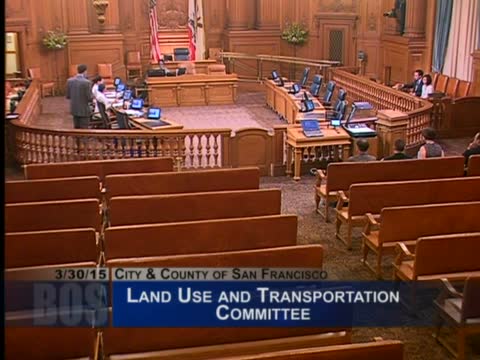
SAN FRANCISCO — The Land Use and Transportation Committee on Tuesday heard the Interagency Plan Implementation Committee (EPIC) annual progress report, during which planning staff outlined a surge in projected impact-fee revenue over the short term alongside a multi-year funding gap for infrastructure in city plan areas.
Chair Supervisor Malia Cohen opened the hearing saying coordination across city agencies is "absolutely essential" to deliver parks, transit and streetscape improvements for growing neighborhoods, particularly in the Eastern Neighborhoods. Planning staff told the committee they are "anticipating about 117,000,000 sort of a bump in fiscal year 18," driven by projects in the pipeline and the winding down of an impact-fee deferral program.
The presentation reviewed accomplishments and priorities across plan areas. For Rincon Hill, staff said Guy Place Park is fully funded and expected to start construction after being acquired with impact-fee revenue. Market Octavia has seen streetscape and bicycle improvements funded in part by developers building required improvements in kind and by matching impact-fee dollars with grant funding. In Eastern Neighborhoods, staff identified the Sixteenth Street transportation improvement (bus rapid transit and pedestrian upgrades) as a major priority and said the department has dedicated $14,600,000 in impact-fee revenue toward the project.
Planning staff also described a new 10-year "constrained capital plan" produced with the Capital Planning Committee to assess where city participation is required to match impact-fee revenue. That analysis produced a citywide 10-year funding gap of about $188,000,000; staff said roughly $140,000,000 of that gap is in the Eastern Neighborhoods plan area and about $44,000,000 is in Market Octavia.
Committee members pressed staff on how impact fees apply and whether the city is capturing development value. Supervisor Weiner asked whether the Transit Impact Development Fee (TIDF) applies to residential development; staff confirmed that TIDF generally does not apply to residential outside of area plans, while area-plan fees include transportation components. Weiner highlighted that in 2013–14 the TIDF collected about $12.5 million while the city collected roughly $40 million for affordable housing and said it was "ridiculous and unsupportable" that the TIDF exemption for residential exists, calling for policy changes at the Board and mayoral level.
Supervisor Jane Kim and others questioned whether certain plan-area fees (for example, Rincon Hill recreation/open-space fees) should be reexamined in light of rising home prices and construction costs; planning staff described the original nexus and feasibility studies used to set rates and said the department added an index to fees to reflect construction cost changes.
Staff also noted examples of alternate funding or delivery approaches: developer-built improvements in lieu of impact-fee payments, sale of Central Freeway parcels to fund parks, in-kind agreements to house childcare operators in developer-provided space, and use of Rincon Hill tax-increment–style tools in limited circumstances. Planning staff highlighted legal constraints on impact-fee use—fees may be used to create additional capacity for new demand but not to fund routine maintenance of existing facilities.
There was no public comment on Item 1. Chair Cohen moved to file the hearing; Supervisor Jane Kim seconded the motion, and the committee approved it by roll call (Kim, Weiner, Cohen: aye).
The committee's discussion underscored both recent progress in delivering infrastructure and the scale of unmet need in the city’s fast-growing plan areas. Planning staff said the constrained capital plan is intended to focus agency and grant-seeking efforts toward the highest-priority projects, and supervisors signaled interest in revisiting fee rates and exploring supplemental revenue tools as policy matters for the full Board.