Get Full Government Meeting Transcripts, Videos, & Alerts Forever!
Get email alerts on the Housing topic
No spam. Unsubscribe anytime.
Supervisors, advocates urge delay to DBI housing‑inspector layoffs as revenues plunge
Summary
At a lengthy April 8 hearing, DBI officials said fee revenue declines forced cuts that would eliminate three housing‑inspector positions effective May 1; supervisors, tenant groups and unions urged deferral and pledged to pursue SURF funds, fee changes and other measures to preserve frontline inspectors.
San Francisco supervisors, tenant advocates and inspectors pressed the Department of Building Inspection (DBI) on April 8 to avoid layoffs of frontline housing inspectors, saying cuts would harm low‑income, limited‑English and other vulnerable renters.
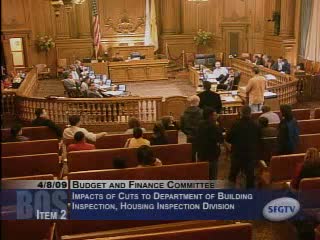
The hearing, convened by Supervisor Chris Daly, focused on three DBI housing‑inspector positions scheduled for layoff effective May 1. Director Vivian Day told the committee that sharp declines in permit activity and fee revenue left DBI facing a growing operating deficit and limited options: she said the department began the fiscal year with an operating balance of about $2.1 million and later incurred additional revenue reductions that left the department “at ground zero” without further cuts.
"We cannot afford to have fewer inspectors in this city because the workload right now of inspectors and the amount of habitability problems and repairs that need to be done is so great," a housing‑program partner told the committee during public comment.
Multiple tenant organizations and community partners described cases in which bilingual housing inspectors intervened to get heat restored, to secure remediation for mold and pests, and to prevent unsafe conditions from worsening; several speakers warned that reduced inspection capacity would disproportionately harm monolingual Spanish‑speaking tenants, seniors and other vulnerable residents.
DBI described near‑term options the committee could help pursue. Director Day said a portion of state SURF funds earmarked for housing work could be reallocated to help avert immediate layoffs, and that an apartment and hotel license‑fee increase already proposed to the Building Inspection Commission is assumed in DBI’s next fiscal‑year projection. She also outlined a potential surcharge or licensing of one‑ and two‑family rental units as a source of recurring revenue but said such legislation must be expedited to appear on tax rolls.
Supervisor Carmen Chu and others responded by pledging committee and board help: Chu said some SURF funds (already partly earmarked) and other unspent grants could be used to defer layoffs, and members asked the mayor’s budget office to work with DBI on a short‑term package. Director Day said access to SURF could allow the department to defer layoffs until July 1 while legislation or other funding solutions are pursued.
DBI contributed an operational perspective: senior inspectors and union representatives said housing inspectors routinely act as caseworkers and mediators—arranging inspections, working with tenants, and following cases through abatement and enforcement—and that each inspector handles many field inspections per day. Inspector Jose Lopez told the committee he performs at least six inspections daily and that about 70% of his contacts in the Mission District require Spanish language skills.
What happens next: DBI asked for time to pursue SURF funds and work with supervisors on possible fee and legislative changes; several supervisors said they would prioritize short‑term steps to protect at least the three positions and to consider longer‑term revenue measures.