Get Full Government Meeting Transcripts, Videos, & Alerts Forever!
Get email alerts on the Capital Plan topic
No spam. Unsubscribe anytime.
Budget committee forwards San Francisco—s 10-year capital plan to full board
Summary
City staff presented the fourth edition of San Francisco—s 10-year capital expenditure plan, highlighting a $28 billion program and policy choices intended to avoid higher property-tax rates; the committee voted to forward the resolution with a recommendation to the full Board.
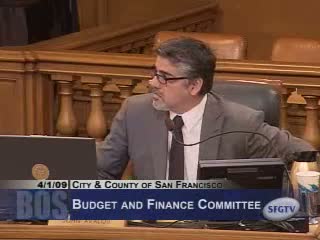
The Budget and Finance Committee on April 1 heard a presentation of the City and County of San Francisco—s fourth 10-year capital plan and voted to send the plan to the full Board of Supervisors with a recommendation.
Brian Strong of the Capital Planning Program and Adam van de Water, assistant director of the Capital Planning Program, described the plan as a constrained, interdepartmental strategy that lists both funded projects and deferred needs across a wide portfolio of assets, from streets and transit infrastructure to two public hospitals and park facilities. Adam van de Water said the plan totals roughly $28 billion, with about $4.1 billion in discretionary general‑fund spending earmarked primarily for earthquake safety, state‑of‑good‑repair work, ADA improvements and parks and libraries.
The presenters emphasized policy constraints intended to limit tax impacts: according to the plan, general obligation bonds would be issued only as existing debt is retired so the city—s overall property‑tax rate would not rise above the 2006 level. Van de Water described a bond schedule that includes a streets bond proposed for the November ballot and a public‑safety earthquake bond the following June to address the auxiliary water supply system and public‑safety facilities.
Supervisors questioned several program elements, pressing for detail on the Hall of Justice plan and on strategies to finance streets maintenance without adding a recurring burden to the general fund. The presenters explained that a prior, single‑phase Hall of Justice replacement was costed at about $600 million in earlier plans but subsequent analysis pushed the likely cost closer to double that amount; the project is now being approached in phased replacements timed across the 10‑year horizon, with demolition of the existing building estimated outside the plan window (presenters said around 2020—2021 as a target, subject to further planning and site acquisition).
Committee members also asked about transferable development rights for the Veterans Building and the pavement condition index for city streets (presenters reported a citywide PCI figure in the mid‑60s). Presenters said the plan incorporates a mix of general fund, general‑obligation bonds, lease revenue and federal and state sources, and it models job impacts from capital spending.
A motion to forward the resolution adopting the 10‑year capital plan to the full Board with the committee—s recommendation was made and, with no objections recorded in committee, passed. The committee asked staff to return with bond packaging and additional detail as the measure moves through the calendar for placement on the November ballot.
What happens next: the resolution will be considered by the full Board of Supervisors; separate bond authorizations will require additional Board actions and, where required, voter approval.