Get Full Government Meeting Transcripts, Videos, & Alerts Forever!
Get email alerts on the Municipal Revenue topic
No spam. Unsubscribe anytime.
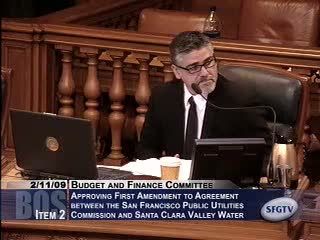
Committee forwards three tax measures for further review after controller—s analysis
Summary
The Budget & Finance Committee heard analysis from the controller and treasury on three proposed ballot measures — a gross‑receipts tax, a half‑cent sales tax with a three‑year sunset, and payroll tax adjustments — and voted to forward items 3–5 to the full board without recommendation for further work and stakeholder negotiation.
The committee considered three linked fiscal proposals intended to help close a projected $576 million budget gap: a 1.395% gross‑receipts levy on commercial real estate and a 0.1% rate on other businesses (Item 3); a 0.5% sales and use tax dedicated to emergency health, human services and public protection for three years (Item 4); and an amendment to payroll tax rates and an expanded small‑business exemption (Item 5).
Monique Zmuda of the controller—s office provided preliminary fiscal estimates: the commercial real estate gross‑receipts tax could generate about $34 million annually; the gross‑receipts levy on other businesses could produce roughly $38 million; together those items were estimated at about $72 million. The proposed 0.5% sales tax was preliminarily estimated to raise about $51 million annually. The controller described these as initial estimates that would be refined with further review.
Deputy Controller Ted Egan delivered a preliminary economic impact analysis. He said the sales tax—s short‑term spending effect is weak and could depress local retail over time by encouraging out‑of‑city or online purchases; his presentation estimated a potential net loss of roughly 300 to 500 jobs per year attributable to the sales tax effect. By contrast, Egan said a gross‑receipts approach could be more stimulative in the short term because it diverts business receipts into government spending, producing a local multiplier; however, competitiveness effects could appear over a longer horizon. On the commercial rent tax he noted higher short‑term stimulus and an estimated short‑term gain of 200–300 jobs per year but cautioned about longer‑term competitiveness impacts.
Treasury staff (David Augustine) said gross‑receipts reporting collected so far is unverified and that auditing and verification would require additional administrative resources. Supervisors pressed for more refined revenue timing tied to the possible election date and discussed whether a June special election or a November ballot would be preferable given administrative lead times and voter turnout considerations.
After extensive questioning, public commentary and an amendment to the sales‑tax expenditure plan (reallocating percentages among police, fire and public health within the dedicated spending categories), the committee voted to forward Items 3–5 to the full Board of Supervisors without recommendation so the measures can be considered as part of a broader package and stakeholder negotiations.
Next steps: controller and treasurer offices will refine fiscal and administrative estimates; the full board will consider the measures and related amendments, with potential special meeting action on Feb. 17.