Get Full Government Meeting Transcripts, Videos, & Alerts Forever!
Get email alerts on the Nonprofit Policy topic
No spam. Unsubscribe anytime.
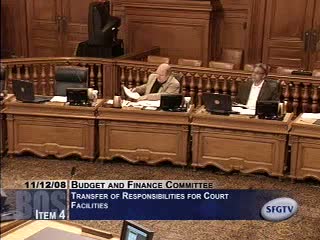
Supervisors Continue Debate on Cap for City-Funded Nonprofit Executive Pay
Summary
The committee debated a proposed ordinance to limit use of city funds for nonprofit executive compensation, including a 6:1 cap proposal requiring annual reporting; after staff and public testimony, members moved amendments and continued the item for one week to allow revised language and further stakeholder discussion.
The Budget & Finance Committee on the record considered legislation to restrict the use of city funds to pay nonprofit executive directors and moved to continue the item for one week after adopting draft amendment language for further refinement.
Chair Supervisor Jacob McGoldrick outlined the policy goal: when the city pays nonprofit salaries with public funds, there should be proportionality between the highest and lowest-paid staff. He read proposed amendment language that would bar any grant or contract entered into after the provision's effective date from using city funds to compensate an executive director in excess of six times the salary and benefits paid to the nonprofit's lowest-paid full-time salaried employee; the amendment would also require annual reporting to the contracting department of the executive director's total pay and the portion funded by the city.
Monique Zmuda of the comptroller's office presented a study comparing nonprofit executive salaries statewide. She said the city attorney advised the board can lawfully limit only city-provided funds and noted $9 million appeared in the study as a threshold where executive pay generally rises; she also described modeling based on National Institutes of Health guidance and said comparisons between executive and line staff pay were not fully quantified in the study.
Debbie Lerman of the San Francisco Human Services Network urged caution, calling the 6:1 cap "arbitrary" and noting the proposal does not by itself address low-end staff wages or take account of organizational complexity; she asked the board to continue discussions.
After discussion, the chair moved the amendments onto the record and asked the city attorney to draft final language for review; the committee agreed to continue the item for one week to permit further stakeholder meetings and precise drafting.
Next steps: city attorney to prepare final ordinance language incorporating agreed amendments and exemptions (for programs such as disability-related participatory employment programs were discussed), and the committee will reconvene next week to consider the revisions.