Get Full Government Meeting Transcripts, Videos, & Alerts Forever!
Get email alerts on the Neighborhood Crime Unit topic
No spam. Unsubscribe anytime.
Supervisors debate neighborhood crime unit ballot measure amid concerns about staffing and local control
Summary
Supervisor Scott Wiener introduced a ballot initiative to create a Neighborhood Crime Unit that would be activated when San Francisco reaches its charter staffing minimum (1,971 officers); supervisors pressed operational questions about source of officers, centralization vs. station-based strategies, and community impacts, and public comment included both support and opposition.
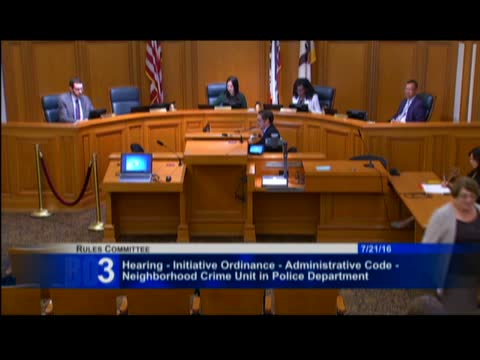
Supervisor Scott Wiener opened discussion of a proposed initiative to create a Neighborhood Crime Unit in the San Francisco Police Department, telling the Special Rules Committee the unit would focus on burglary, auto break‑ins, theft and bike theft while emphasizing collaboration with social‑service agencies.
"This measure will create a specific unit in the police department known as the neighborhood crime unit," Wiener said, describing requirements that the unit be activated when the controller certifies the department has reached the charter staffing minimum of 1,971 officers and that no less than 3 percent of officers be assigned to the unit.
Wiener argued the unit would restore community policing: officers would walk beats and build relationships with residents and merchants and coordinate with the Department of Public Health, the Human Services Agency, and the Department of Homelessness and Supportive Housing to connect people in crisis with services.
Several supervisors pressed details. Supervisor Norman Yee said neighborhood captains and station‑level strategies have produced early successes in his District 7 and worried that creating a centralized unit could pull officers away from stations: "My concern here is that I hope that whatever happens ... it doesn't put the reverse our efforts."
Wiener and supporters said the initiative is meant to increase neighborhood presence, not to remove officers from stations, and that the measure mandates involvement from district captains and community members in unit planning. Wiener noted that the board has adopted a policy resolution saying full staffing is 2,200 officers but that the charter minimum triggering this unit is 1,971.
Public comment reflected sharp disagreement. Jordan Gwendolyn Davis, a transgender‑rights activist, told the committee she "vehemently oppose[d] this neighborhood crime unit boondoggle," arguing the proposal would revive broken‑windows policing and disproportionately harm homeless and LGBTQ people. Other public commenters urged more foot patrols and data‑driven approaches.
The committee closed public comment and voted to file the hearing; filing does not adopt the initiative but moves the item through committee records and onward to the full Board.
Next steps: the measure will proceed through the Board process and, if certified for the ballot, would go to voters in November.