Get Full Government Meeting Transcripts, Videos, & Alerts Forever!
Get email alerts on the Sugary Drinks Tax topic
No spam. Unsubscribe anytime.
San Francisco supervisors hold hearing on 1¢‑per‑ounce sugary drinks distributors' tax; comptroller estimates $14.4 million annual revenue
Summary
The Rules Committee held a public hearing on a proposed 1¢‑per‑ounce distributors' tax on sugar‑sweetened beverages, with health professionals and community groups urging support and the comptroller estimating roughly $14.4 million a year in revenue; supervisors filed the hearing for the record and continued deliberations.
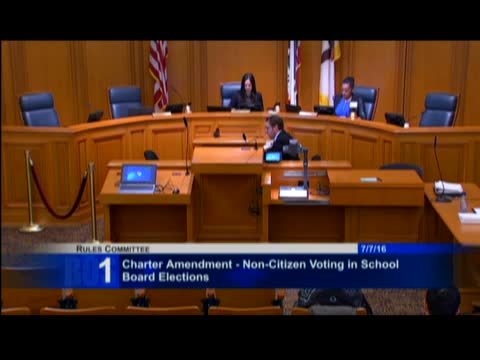
Supervisor Jane Kim? (Note: The transcript identifies Supervisor Tang as lead on the item) — Correction: Supervisor Tang (committee sponsor) opened the July 7 Rules Committee hearing on an initiative ordinance to impose a 1¢‑per‑ounce distributors' tax on sugar‑sweetened beverages and to create a 16‑member advisory committee to recommend how revenue should be spent.
Tang framed the proposal as a public‑health response to rising rates of obesity and type‑2 diabetes, particularly in communities of color, and said the measure was “expected to generate $24,000,000 annually.” She called for dedicating revenue to nutrition education, physical‑activity programs, chronic‑disease prevention and food‑access programs and for an advisory board including medical and subject‑matter experts to advise the Board of Supervisors and the mayor's office.
The panel heard more than two dozen public‑comment speakers. Medical and public‑health witnesses — including Dr. John Ma (San Francisco Medical Society), Dr. Ayanna Bennett (pediatrician), Dr. Jeff Ritterman (Physicians for Social Responsibility), and Dr. Robert Gould (physician/advocate) — described clinical evidence they said links liquid sugars to type‑2 diabetes and oral disease in children and urged passage. Jonathan Butler (representing the NAACP), Vanessa Bohm (CARECEN), Deborah Elam (San Francisco Dental Society) and other community‑based speakers cited racial and neighborhood disparities and endorsed the tax as part of an equity‑focused prevention strategy. Several witnesses cited international and local examples they said show taxes reduce sugary beverage consumption; Supervisor Tang pointed to Mexico's 2014 tax and referenced a reported 12% one‑year sales decline there.
Not all figures presented at the hearing matched. Supervisor Tang stated an estimated $24 million annual yield; Natasha Michal of the Comptroller's Office presented the official costing letter during the hearing and estimated approximately $14,400,000 per year if the tax were enacted effective Jan. 1, 2018 (with $7,200,000 in FY2017‑18 and $14,400,000 in the following fiscal year). The committee did not resolve the discrepancy at the meeting; the comptroller's estimate was entered into the record.
Speakers emphasized using funds for prevention and community programs. Supporters repeatedly described beverage‑industry marketing targeted at Latino, Black and Asian youth and said a dedicated revenue stream would underwrite education, community health‑worker programs, water access in schools and oral‑health interventions. Supervisor Weiner — who spoke during the hearing — reiterated political support and referenced past ballot experience and strong grassroots organizing.
Procedure and next steps: After public comment and the comptroller's presentation, the committee held the hearing and filed the item; the clerk recorded the hearing as held and filed with the Rules Committee. No final action to place the measure on the ballot or set final allocations occurred at this meeting; the committee recorded motions to file the hearing and to return the item for further consideration consistent with standard Rules Committee procedure.
Provenance: The discussion and public testimony on the soda tax are documented in committee transcript segments beginning with the clerk's Item 2 introduction (SEG 049) and continuing through the comptroller's costing letter (SEG 1210–1215). Representative quotations and claims are drawn from testimony by Supervisor Tang (SEG 059–076, SEG 069), Dr. John Ma (SEG 169–198), Dr. Ayanna Bennett (SEG 353–393), Deborah Elam (SEG 441–480) and Natasha Michal (SEG 1210–1215).
What remains unresolved: The committee did not adopt ordinance language or an allocation plan at this hearing. Key open items include reconciling revenue estimates, final advisory‑board membership language, and the precise programmatic uses of revenue; those topics will be addressed in follow‑up meetings and drafting sessions.