Get Full Government Meeting Transcripts, Videos, & Alerts Forever!
Get email alerts on the Open Source Voting topic
No spam. Unsubscribe anytime.
Rules Committee hears proposal for San Francisco to fund an open-source voting system; budget ask enters process
Summary
Supervisors heard a plan for a modular, open-source paper-ballot voting system and a budget request that includes $300,000 for planning and a $2 million initial development ask; advocates emphasized accessibility and transparency, and the committee filed the hearing for the budget process.
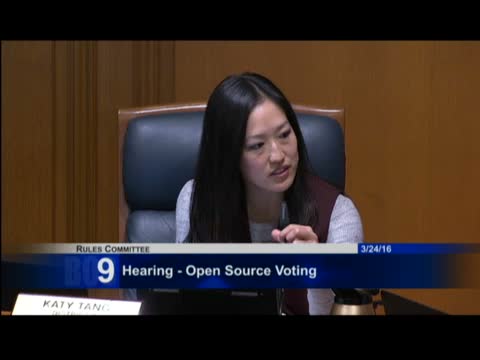
The Rules Committee held a hearing on March 16 on a San Francisco effort to fund, design and implement an open-source voting system, a multi-year project proponents say could increase transparency and reduce long-term vendor costs.
Supervisor Scott Wiener and Chris Jerdanek, vice president of the Elections Commission, described a two-phase approach: a 10-month planning and assessment phase to refine requirements and cost estimates, followed by two-plus years of development and certification. The Elections Commission passed a unanimous resolution calling for the city and mayor to fund an open-source project.
Jerdanek said advocates and respondents to an earlier request for information estimated the cost at roughly $6 million over three years. For the current budget cycle the Department of Elections requested $2.3 million — including $300,000 for planning/assessment and $2 million to begin development — to avoid delaying work for another budget cycle.
Public commenters included Disability Rights California, which emphasized that any new voting system "both the software and the hardware, be designed with full accessibility for all voters, especially those with disabilities." Technologists, advocates and local voting-rights groups urged the board to consider a General Public License for the code and to coordinate with other jurisdictions. Several speakers suggested state funding opportunities.
Committee members asked about certification, risk mitigation and adaptability for San Francisco's specific requirements (ranked-choice voting, county/city needs). Jerdanek said modular design and incremental testing would limit risk: separate components (precinct scanner, image-capture software, interpretation module, accessible voting device) could be developed, certified and piloted separately.
Supervisor Wiener said the city may save money over time because open-source code is publicly owned and not subject to perpetual licensing fees; proponents also noted the possibility that other jurisdictions would contribute improvements back to the shared codebase.
Disability Rights California and other commenters asked the committee to ensure off-the-shelf hardware could meet accessibility requirements or to budget appropriately for accessible devices. The committee voted to file the hearing and to pursue the budget request through the city's budget process.
What happens next: the requested planning funds are before the mayor's budget office and the Board's budget process; staff and the Elections Department will return with refined cost estimates and a proposed workplan if funding is approved.