Get Full Government Meeting Transcripts, Videos, & Alerts Forever!
Get email alerts on the City Budget topic
No spam. Unsubscribe anytime.
Controller: Mayor's $6.5 billion budget broadly reasonable but growing costs and revenue risks loom
Summary
Controller Ben Rosenfield told the Budget & Finance Committee the mayor's proposed $6.5 billion all-funds budget is broadly reasonable given current trends, but flagged rising wage/benefit costs, volatile property transfer taxes and state budget risks that could produce shortfalls.
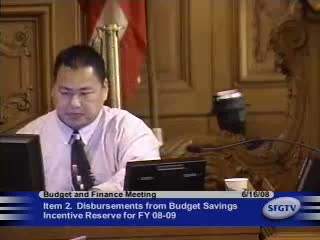
Controller Ben Rosenfield told the Budget & Finance Committee on June 16 that the mayor's proposed fiscal year 2008-09 budget is "reasonable given the current economic trends" but carries several risks that could create shortfalls.
Rosenfield said the proposed all-funds budget totals about $6.5 billion, a 7.3 percent increase from the prior year, with a general fund portion of roughly $3.05 billion (about a 4.4 percent increase). He said most of the revenue growth is coming from property and local taxes and strong hotel tax receipts, but cautioned that expenditures are growing faster than revenues largely because of wage and benefit costs and mandated spending increases.
"Annualizations of positions added in the prior year, closed MOU costs and benefit cost increases are roughly equal to the growth in general fund revenues," Rosenfield said, adding that "anything else that's resulting in additional costs is really driving a shortfall situation for the city." He pointed to voter-approved baselines, non-salary inflation, debt service and rising costs in human services as contributors to the gap.
Rosenfield highlighted a volatile forecast for real property transfer taxes: the proposed budget assumes $67 million in transfer-tax receipts next year after 9-month results showed a $30 million decline from prior-year budgeted expectations. He also flagged an $80.8 million anticipated ending balance and detailed proposed use of one-time sources, including liquidation of a publicly financed mayoral election fund and the proposed assumption that voters will approve San Francisco General Hospital bonds in November that would reimburse prior planning costs.
On reserves, Rosenfield said the city's rainy-day fund currently holds about $120 million; the budget proposes allocating roughly $19.3 million of that to the school district if state and local conditions make that appropriate. He also said his office is holding $191.9 million in proposed expenditures on reserve pending the board's review of Laguna Honda financing legislation and another contingency tied to the SFGH bond.
Rosenfield warned of $113.3 million in proposed state cuts that could affect the city, of which the mayor's budget assumes about $78 million. He singled out potential reductions in state participation for In-Home Supportive Services (IHSS) and other state-driven program shifts as key uncertainties.
Committee members pressed Rosenfield on several topics including the triggers for local recession, how interest and investment income is declining (he pointed to lower yields and drawn-down cash balances), and the mechanics of staffing-driven baselines for police and fire. Rosenfield said the proposed budget would end the fiscal year with about 1,984 full-duty police officers, exceeding the charter minimum of 1,971.
Rosenfield closed by urging further work with the budget analyst and departments as the committee proceeds through departmental hearings and second-round deliberations. The committee filed the revenue letter for the record and deferred several budget decisions for follow-up in next week's hearings.
What comes next: the committee will continue department-level hearings this week and reconvene for the second round of deliberations next week; Rosenfield and budget staff committed to provide additional breakdowns and clarifications on reserves, litigation closeouts and staffing baselines.