Get Full Government Meeting Transcripts, Videos, & Alerts Forever!
Get email alerts on the Rec And Parks topic
No spam. Unsubscribe anytime.
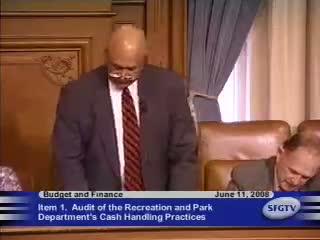
Budget analysts flag gaps in Rec & Park cash controls; department pledges online system and fee codification
Summary
A budget analyst follow-up audit found weak cash controls in the Recreation and Park Department — including uncodified program fees, missing admission transactions and weak incident reporting — and the department said it will finish implementing its SFREC online system and route fees into city accounts in the FY08–09 budget.
A follow-up audit presented to the San Francisco Board of Supervisors Budget & Finance Committee found weaknesses in the Recreation and Park Department’s cash-handling practices and recommended codifying uncodified program fees, strengthening two-person cash controls and improving incident reporting.
Stan Jones of the budget analyst’s office told the committee the audit reviewed prior recommendations and identified six new findings and 26 recommendations. Jones said the report flags several program fees (futsal, 7-a-side soccer, women’s basketball and tennis instruction) that had not been approved by the Recreation and Park Commission or codified in park code as required by the charter. "These activities have been in use for years...the fees collected by staff are transported to McLaren Lodge where they are turned over to the Parks Trust," Jones said, noting the report lists several years of program fee collections.
The auditors found operational gaps at admissions gates and concessions. They reported missing numbers in non-resettable Z-out tapes at admissions gates (notably the Japanese Tea Garden and the tennis courts), single-employee cash handling on some shifts and inconsistent recordkeeping for free admissions and special-day waivers. The report also highlighted permit and reservation errors at the Log Cabin unit, where a random sample of 50 permit files showed five inaccurately reported transactions (10%).
The audit reviewed several concession arrangements and lease histories, including the Stow Lake boathouse, where a holdover clause reduced the operator’s payment to the city to 10% of gross receipts rather than contract rates that would have yielded roughly double the revenue for the sample year. The report recommended expediting lease review and bringing new lease provisions to the Board of Supervisors for approval.
In response, Recreation and Park General Manager Yomi Agunbiadian thanked the budget analyst and described steps already underway to reduce reliance on cash and improve reconciliation. "The system allows us to accept credit cards both in person and online...we've termed it SFREC online," he said, explaining the department plans to complete the last module — facility rentals, permits and reservations — by the end of the calendar year. He told the committee that uncodified program fees have been cured in the fiscal year '08–'09 budget and that future program fees will come through city systems rather than to the San Francisco Parks Trust.
Katie Petruccione of Recreation and Park added the department has been selling multi-visit passes for years and is beginning new annual and monthly passes that could reduce on-site cash transactions.
Public commenters pressed for faster, enforceable fixes before increasing fees. Meredith Thomas of the Neighborhood Parks Council said "cash handling practices are a key component" and urged that any new revenue be handled transparently. Nancy Werfel told the committee she was "dissatisfied with Rec and Parks leadership for their lack of respect for the public's cash" and urged immediate, verifiable steps such as two-person cash counts and regular staff reporting.
The committee heard that the department disagreed with only a small number of the audit’s recommendations while accepting most and committed to implementing SFREC online’s final module and to codifying fees in the coming budget cycle. The audit identified specific control and recordkeeping weaknesses that the department said it is addressing; the department and the budget analyst will follow up during scheduled budget hearings.