Get Full Government Meeting Transcripts, Videos, & Alerts Forever!
Get email alerts on the Elections topic
No spam. Unsubscribe anytime.
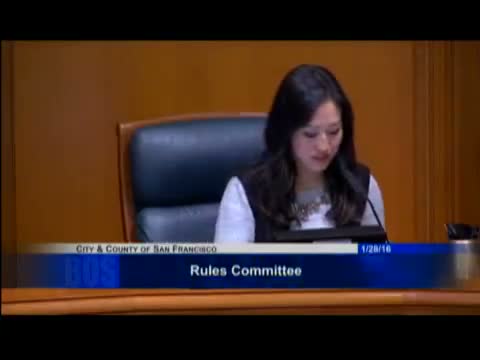
Committee splits and duplicates charter file on special elections for supervisor vacancies; seeks further review
Summary
Committee debated a charter amendment that would require a special election for Board of Supervisors vacancies and an interim mayoral appointment ineligible to run; members voted to duplicate the file and continue both versions to a special rules meeting so alternate language can be considered before the February Board deadline.
The Rules Committee considered a third draft of a charter amendment (item 8) proposing that the Department of Elections call a special election when a seat on the Board of Supervisors is vacant unless a regular election is within 180 days, and that the mayor appoint an interim supervisor within 28 days who would be ineligible to run in that special election.
Jeremy Pollock, legislative aide to Supervisor John Avalos, summarized a narrowed measure that focuses on supervisorial vacancies and the mechanics for the interim appointment and special election timeline. "This charter amendment has been before you a number of times so I—ll be very brief," Pollock said, describing a process that would give the Department of Elections authority to consolidate the special election with a regularly scheduled election where practical and to request timing extensions by Board resolution.
Supervisors probed the measure—s timing and unintended consequences, including the reason for the 126- to 140-day window used in state election code practice and the interim appointee—s ineligibility to run. Supervisor Malia Cohen asked about costs and consequences; several supervisors warned that a special election could draw low turnout and that an interim supervisor who votes on board business before the permanent election raises accountability questions.
Supervisor Marr and others argued that the approach reduces the power of mayoral incumbency by giving voters a more immediate chance to choose a district representative. Because members wanted more time to weigh competing language, the committee voted to duplicate the file and send both versions to a special Rules Committee meeting (continue to the call of the chair) so supervisors could consider alternative drafts while meeting charter-amendment filing deadlines.
Next steps: The committee duplicated the file and continued the item to the call of the chair for a special Rules Committee meeting so supervisors—alternate language and concerns (interim appointment eligibility, consolidation rules and turnout) can be reconciled before the item goes to the full Board.