Get Full Government Meeting Transcripts, Videos, & Alerts Forever!
Get email alerts on the Solar Incentive Program topic
No spam. Unsubscribe anytime.
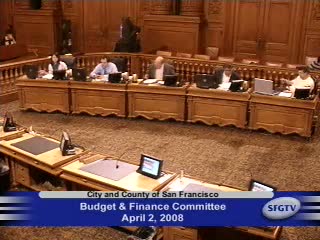
Supervisors pause $3 million MECA allocation as public backs city solar pilot
Summary
After extended questioning about how the Mayor’s Energy Conservation Account (MECA) funds are being used, the Board’s Budget & Finance Committee continued an ordinance to reserve $3 million for a PUC-run solar incentive pilot and asked staff for a written project list, funding breakdowns and metrics to measure public benefit. Dozens of public commenters urged approval, citing job creation and low‑income outreach.
San Francisco’s Budget & Finance Committee on Item 1 paused a $3,000,000 reallocation of the Mayor’s Energy Conservation Account (MECA) to a Public Utilities Commission (PUC) solar incentive pilot and asked agency staff for more detail before moving forward.
Chair Supervisor Jake McGoldrick, who brought the reservation request to committee, said he wanted to “hit the pause button” so the Board can review what the MECA fund was intended for and how funds have been spent. McGoldrick pressed staff for a written inventory of projects and a clearer statement of public benefit, saying the appropriation previously appeared as a single, sparsely described line item in the annual appropriation ordinance and that “it’s very important that we have a policy discussion about what this MECA Fund is all about.”
Monique Smuta of the Controller’s office told the committee the MECA fund has historically supported energy‑conservation projects on city‑owned facilities and that projects had typically been set up in the accounting system when funds were appropriated. She said the specific pilot staff proposed was not in the controller’s prior plans and that the controller would provide the committee a list of all projects funded through MECA and identify any unassigned amounts.
Barbara Hale, assistant general manager for power at the PUC, described the PUC’s planned approach: use power purchase agreements (PPAs) to install solar on municipal sites without requiring the full construction capital up front, and buy the electricity produced over time. Hale listed candidate municipal locations that PUC staff have been studying, including the Sunset Reservoir, Pier 96, Moscone Center, a Chinatown health center, several Muni facilities and portions of the City’s watershed lands. She said the PUC issued an RFP for PPA development and expects a larger pipeline of projects using PPAs than would be possible with direct design‑build on city rooftops.
PUC staff and committee members debated the tradeoffs. PUC staff estimated that a $3 million allocation applied to a private‑owner incentive program would yield roughly 1.5 megawatts of installed solar, whereas applying the same funds to a municipal design‑build approach would produce nearer 240 kilowatts. PUC staff also noted municipal projects are now ineligible for some state rebates after recent rule changes, which makes financing approaches such as PPAs more attractive.
Dozens of members of the public urged the board to allow the pilot to proceed. Speakers from workforce and neighborhood organizations, local solar companies and venture investors said the pilot would create local jobs—especially in Bayview/Hunters Point—spur training programs and help San Francisco leverage private and state funds. A. Philip Randolph Institute, VoteSolar, DBL Investors, SolarCity, Occidental Power, SunTek America and others delivered remarks in support. Several speakers asked the Board to include means‑testing or lifeline targeting so limited‑income homeowners could access benefits.
After debate about scheduling (several supervisors said the rules committee process had fragmented the review), the committee adopted a motion to continue the item for two weeks so the PUC, Controller’s office and mayor’s staff can provide the written project lists, an itemized accounting of MECA allocations, and the metrics and outreach proposals requested by supervisors. The continuance passed without objection.
What’s next: the PUC and Controller’s office committed to supply a report to the committee with a project inventory, any unassigned funds, and proposed eligibility/means‑testing and cost‑containment ideas. The ordinance to reserve funds will return to the committee for further consideration after that report.