
Hopkins presents annual achievement report: early-learning gains, persistent gaps and a literacy action plan
Get AI-powered insights, summaries, and transcripts
Subscribe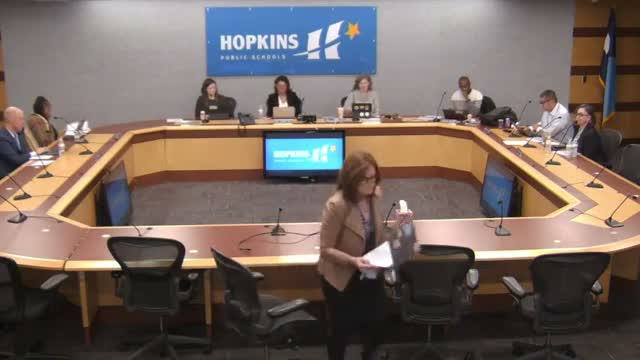
Summary
District reports show preschool proficiency exceeding targets; the white'students vs. students-of-color MCA reading gap widened slightly; district launched new K—5 math adoption and expanded literacy screening (FastBridge, Capti Read Basics) while Panorama SEL results show high elementary belonging but low secondary engagement and growth mindset.
District leaders presented the Comprehensive Achievement and Civic Readiness (CACR) annual report and winter data review, summarizing progress on last year's goals and next steps.
Highlights: - Early learning: The district exceeded the preschool proficiency target in the personal and social development domain, a result leaders said demonstrates the value of high-quality early learning. - Achievement gaps: The reading proficiency gap between white students and students of color on the MCA widened slightly (from 33.4% to 34.8%), attributable in the presentation to a decline in proficiency among students of color. District leaders said they will intensify literacy supports and foundational-skill work to address disparities. - College and career readiness: Hopkins met its benchmark for 11th-grade ACT composite scores (48% of students met the district target of 21 or higher on the school-day test). - Graduation: The state-reported 4-year graduation rate was 84.7%, below the district goal of 87.4%; district staff said they are investigating discrepancies between local verification and state reporting and launching targeted credit-recovery work for seniors. - Social-emotional learning (Panorama): Elementary (grades 3—5) students reported high favorable rates (sense of belonging ~95%, positive feelings ~96%); secondary (grades 6—12) results showed lower favorable responses with engagement at 25% and growth mindset at 36%. - Literacy implementation: The district is implementing the Read Act requirements, using FastBridge (K—8) and introducing Capti Read Basics as a universal screener for grades 4—0 this year to identify characteristics of dyslexia. The literacy team said screening shows continued needs in decoding and fluency for some students and called for sustained coaching and implementation support.
Kim Smith (literacy) described classroom-level response strategies and a newly created Hopkins Literacy Toolkit for caregivers. District leaders flagged a need for funded literacy coaching and noted that some state-mandated training and materials (phase 2 of READ Act guidance) have been delayed or are unfunded, complicating local implementation planning.
Board members asked for disaggregated classroom-level analysis to identify bright spots and replicate practices; district staff said they will continue site-level data reviews and return with fidelity and implementation indicators in upcoming meetings.