Get Full Government Meeting Transcripts, Videos, & Alerts Forever!
Get email alerts on the Transparency topic
No spam. Unsubscribe anytime.
Rules Committee approves Sunshine Ordinance amendment to require public calendars for elected officials
Summary
The committee adopted amendments to the Sunshine Ordinance to require elected officials and department heads to keep public daily calendars identifying attendees or organizations represented, with specified confidentiality exceptions and implementation clarifications, and forwarded the ordinance to the full Board with recommendation.
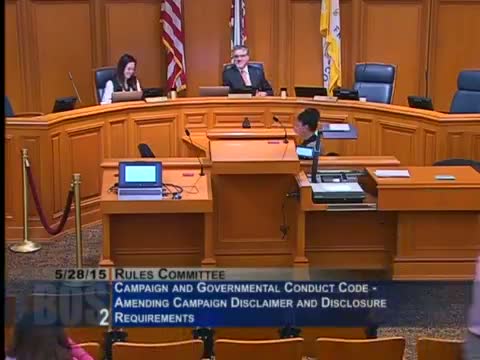
The Rules Committee on May 28, 2015 approved an amendment to the Sunshine Ordinance requiring elected officials and certain city executives to keep daily public calendars that identify the individuals and organizations present at meetings and events, with specific exceptions for confidentiality.
Chair John Avalos presented the ordinance and a set of technical amendments that narrow and clarify the rule. The amendment requires officials to attempt to identify attendees at meetings with 10 or fewer attendees, but it does not compel any attendee to identify themselves. The draft also includes specified exceptions for situations where disclosure would "reveal the identity of a confidential whistleblower" or would otherwise reveal personnel information not subject to disclosure under state or local law; the chair read language to add personnel‑information protection and to conform exemptions to California Government Code section 3504 for labor representation.
Deputy City Attorney John Gibner advised that the personnel exception can be implemented by adding the phrase "would reveal personnel information not subject to disclosure," and he described the existing public‑records and whistleblower confidentiality analyses that will guide redactions. The Department of Human Resources asked for language to protect personnel and EEO cases; the committee agreed to add the personnel‑information exception to address that concern.
Supporters included the Pacific Media Workers Guild and the Sunshine Ordinance Task Force, which said broader public access to calendars improves the public’s ability to track lobbying and meetings with regulated parties. Friend of Ethics representatives also supported the amendments as a way to identify regulated community members such as lobbyists and campaign consultants.
The committee adopted the amendment of the whole and voted to forward the ordinance to the full Board with recommendation. Chair Avalos said staff and members have already begun tracking attendees under the amended standard.
Next step: the ordinance will be considered by the full Board of Supervisors; staff and the city attorney will coordinate language to ensure appropriate redactions for personnel and other exempt matters.