Get Full Government Meeting Transcripts, Videos, & Alerts Forever!
Get email alerts on the Local Hire Policy topic
No spam. Unsubscribe anytime.
Rules Committee pauses planned ramp-up of local-hire percentage to gather more data
Summary
The committee voted to extend review of the city—s local-hire ordinance and hold the mandatory share at 30% while staff finish a market analysis and evaluate impacts of recently broadened local-hire coverage.
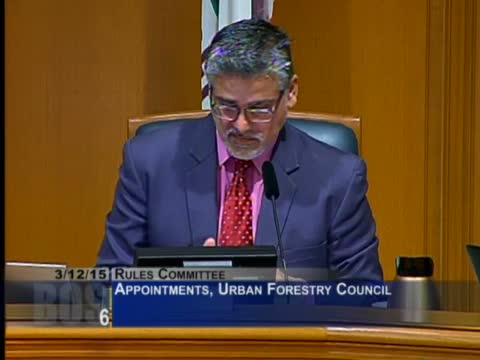
The Rules Committee voted March 12 to forward a resolution to the full Board that pauses the next scheduled increase in the city—s mandatory local-hire percentage and directs staff to complete data collection and market analysis.
The resolution, introduced by Chair John Avalos and supported by supervisors on the committee, leaves the current mandatory participation level at 30 percent while the city evaluates the effect of expanding local-hire to private development on public land (notably the forthcoming Pier 70 project) and the recent US Department of Transportation pilot that permits local-hire provisions on federally funded transit projects.
Why it matters: San Francisco—s mandatory local-hire ordinance seeks to channel construction employment on covered projects to local residents. An unprecedented construction boom and expanded coverage to private-adjacent projects have increased demand on the local workforce and prompted concerns about capacity, contractor compliance and the effectiveness of training and first-source programs.
Committee action and rationale: Pat Mulligan (workforce development) briefed the committee on market pressures, upcoming projects (Pier 70, Park Merced, CPMC and Van Ness BRT pilot) and the need for more comprehensive outcomes data before increasing the mandatory percentage. The committee accepted the recommendation and forwarded the resolution to the full Board as a committee report with a positive recommendation.
Ending: The full Board will consider the resolution on March 24; committee members said the pause is designed to refine the program and ensure workforce capacity before any further mandated increases.
Quote: "This creates additional pressure on the local workforce... we—re still trying to gauge the potential impact," Pat Mulligan told the committee.