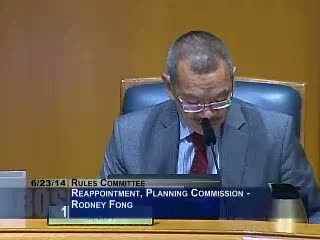
Rules Committee forwards amended "Laura's Law" to full Board after hours of testimony
Loading...
Summary
The Rules Committee voted June 23 to advance an ordinance to implement Assisted Outpatient Treatment ("Laura's Law") in San Francisco, approving amendments to strengthen voluntary engagement, create a DPH care team, require training and emphasize least-restrictive settings after extensive testimony for and against the measure.
San Francisco's Rules Committee on June 23 voted to forward an ordinance to implement Assisted Outpatient Treatment, commonly called Laura's Law, to the full Board of Supervisors after a lengthy public hearing and negotiated amendments.
Supervisor David A. Farrell, the ordinance's sponsor, said the measure would give families and the city a narrowly targeted option to get treatment to people with severe mental illness who cannot recognize their need for care. Farrell described two parallel efforts: an ordinance the Board could adopt and a ballot initiative; he said the ordinance, strengthened by amendments, would be the preferable legislative route.
"This is no panacea, but it is an important tool," Farrell said, adding that the changes he and colleagues negotiated would create a DPH oversight team and maximize opportunities for voluntary treatment prior to any court order.
Supporters called for the measure as a compassionate tool for a very small subset of people with serious mental illness. Nick Wilcox, whose daughter's death led to the law's name and statewide statute (AB 1421), said Nevada County's experience showed reduced rehospitalizations, incarcerations and homelessness among those under AOT and urged implementation in San Francisco. Police and fire chiefs testified the measure would provide additional options for first responders who repeatedly encounter the same individuals in crisis.
"We need to do something," Police Chief Craig Serf said, asking officials to give responders more tools to connect vulnerable people to care.
Opponents—peer-run groups, consumer advocates and some clinicians—warned the court-ordered process risks coercion, stigma and disproportionate impact on people of color. Speakers from the Mental Health Association and other peer-led organizations urged investment in voluntary, culturally competent services and housing instead of creating new court processes.
Key compromises approved by the committee require the Department of Public Health to establish a multidisciplinary care team (including a forensic psychiatric evaluator, a peer specialist and a family liaison) to attempt voluntary engagement at multiple stages; mandate culturally and linguistically appropriate services; require training for implementing staff; emphasize the least-restrictive settings; and restrict police transfers to court unless probable cause for a 5150 hold exists.
Dr. Mark Leary, representing the Department of Public Health, described AOT as an additional option for a small population whose illness prevents them from accepting treatment. He emphasized that AOT does not itself compel medication and that the process involves court oversight. He also noted DPH treats more than 30,000 individuals annually in voluntary programs and that implementation would need operational investments in language access and staffing.
The committee's action was procedural: members voted to adopt the amendments and send the ordinance to the full Board for consideration rather than placing the measure directly on the November ballot. Supervisor Campos, who has long expressed reservations about compulsory elements of the law, said negotiating amendments and keeping the policy within the Board's legislative process would allow adjustments during implementation.
The full Board is expected to receive the ordinance with the committee's amendments; the next steps include detailed implementation planning by DPH and follow-up oversight at subsequent hearings.
Sources: committee testimony and public comment at the Rules Committee special meeting on June 23, 2014.