Get Full Government Meeting Transcripts, Videos, & Alerts Forever!
Get email alerts on the Budget Local Services topic
No spam. Unsubscribe anytime.
Hundreds of San Franciscans Urge Supervisors to Restore Cuts to Seniors, Homeless Services, Youth Programs and Health
Summary
At a marathon public‑comment session before the San Francisco Board of Supervisors budget committee, speakers pressed the board to restore or add funding for senior and disability services, shelters and drop‑in centers, youth and violence‑prevention programs, school wellness centers, and neighborhood parks.
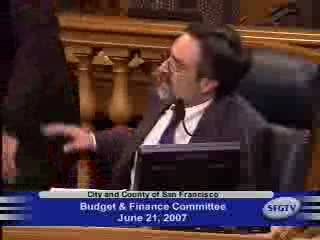
The San Francisco Board of Supervisors' Budget & Finance Committee heard hours of public testimony Thursday as hundreds of residents, nonprofit leaders and students urged the board to reverse or soften cuts in the mayor's proposed budget.
Speakers across neighborhoods and service sectors said the mayor's plan would reduce or eliminate programs that city residents rely on. "Please replace the money for the senior services," said Marilyn Jane Isabelle, a longtime activist for LGBT seniors, arguing that cuts would force many older residents into isolation. Multiple Filipino community leaders described a makeshift Filipino Senior Resource Center operating without stable funding and asked the board and the mayor to allocate support so culturally appropriate services continue.
Advocates for homeless services warned of acute losses. Jennifer Friedenbach of the Coalition on Homelessness said the mayor "took out" a $1,080,000 line item that supports Buster's Place, a 24‑hour drop‑in center, and warned that the closure would remove late‑night access to shelter beds and basic services. Mother Brown's dining room and related Bayview support programs — speakers said — are serving far more people than their current funding covers and sought additional city support.
Youth and violence‑prevention groups pressed the committee for restorative funding for summer and year‑round programs, job training and outreach targeted to neighborhoods with recent shootings. James Cass, executive director of YouthSpeaks, said his group was denied $350,000 in DCYF funding this year and asked for at least $150,000 to continue hiring and programming that reaches teens across the city. Multiple young speakers from the Western Addition, Excelsior and Mission described violence and urged investments in teen centers, gender‑specific programming, and stipends that keep kids off the street.
Health‑program requests were widespread. Cancer support groups asked the board to restore a health‑educator position costing about $113,000 so bilingual and culturally tailored support groups can continue. School wellness center staff and students urged the committee to add back $350,000 to ensure behavioral‑health counselors at four new wellness sites, saying those counselors provide crisis intervention and language‑accessible services for recent immigrants.
Several speakers defended investments in parks, recreation and community facilities. Rec & Park supporters asked the board to fund gardeners, custodians and park patrol officers in what proponents called the first meaningful operating increase for parks in years. Neighborhood groups described projects — including a $750,000 shortfall to finish Franklin Square — that would require additional capital or operating support.
Nonprofit leaders and unions requested increases to the city’s contractor cost‑of‑doing‑business adjustments so community‑based organizations can retain staff and meet higher health‑care and benefit costs. Advocacy groups also warned against proposed reductions to harm‑reduction services: the Homeless Youth Alliance and needle‑exchange programs described reductions that would cut hours and outreach capacity and urged restoration of roughly $125,000 for needle exchange programs and $75,000 for overdose‑prevention efforts.
During the hearing the Juvenile Probation Commission's representative said the commission had sought a $10.2 million supplement; the mayor proposed $2.1 million in response, a shortfall that commission members called "totally inadequate." Multiple speakers asked the board to defend previous commitments to affordable housing and to allocate $30 million or more to family housing and immediate repairs in public housing developments.
The hearing closed without votes on budget items. Near the end of the public testimony the committee adopted, "without objection," a motion to continue budget deliberations to the committee's next Monday meeting. The motion to continue was made from the floor and approved procedurally.
What happens next: the Board of Supervisors will take statements from constituents into account as it considers amendments to the mayor's proposed budget in the coming days. Committee members said publicly that some items could be reappropriated or added back during deliberations, but they stressed that the mayor's proposal remains the starting point until the board formally votes.