Get Full Government Meeting Transcripts, Videos, & Alerts Forever!
Get email alerts on the Museum Staffing topic
No spam. Unsubscribe anytime.
Museum staff urge San Francisco budget committee to end two-tier system, convert 35-hour posts to 40 hours
Summary
Museum security officers and union representatives told the Budget and Finance Committee that reliance on 35-hour part-time and per-diem staff under a two-tier system is hurting morale, training and public-safety readiness; they urged converting positions to 40 hours and opposed proposed management raises.
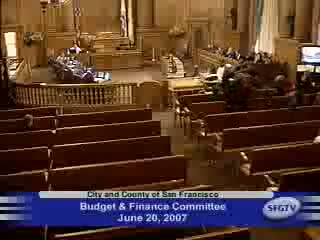
San Francisco Budget and Finance Committee Chair Aaron Peskin heard repeated appeals on June 21 from museum security staff and SEIU representatives to end a perceived two-tier staffing system at the Fine Arts Museums and the Asian Art Museum.
James Bryant, identified as political chair for SEIU Local 1021, told the committee the union opposes the addition of management positions that would come with large pay increases and asked the board to "address the issue of what we call a 2 tier system" while prioritizing permanency and full hours for part-time and per-diem workers. "We clearly do not support adding additional management positions, some of which will be increased salaries of up upward near 40%." (James Bryant)
Museum staff and union speakers described the hardship of 35-hour schedules for workers who must care for families and stressed operational risks. Paula Kotakis, a 24-year Fine Arts Museums employee, said making all positions 40 hours would help single parents who currently struggle to earn a living at 35 hours a week. Tim Sullivan of the Asian Art Museum warned that unstable staffing undermines morale and training, and could harm "the health and safety of the patrons" because staff protect property and life.
Officer Jane Coffey, a 16-year veteran at the Fine Arts Museums, urged the committee not to let managers "embellish their own salary level" while rank-and-file and per-diem staff remain on 35-hour schedules. Coffey said several senior guards already supervise daily operations and flagged a personnel decision that placed "an associate security director" on a personnel bracket that was said to include a $40,000 increase.
Union representative Don Evans said his review of the management proposal showed the new permanent hires were still being proposed as 35-hour positions, which he described as a continuation of the two-tier practice rather than its remedy. "We're encouraged that they wanna bring people on as permanent but they need to go all the way because we don't want an encroachment or a rolling back" (Don Evans).
Budget staff told the committee their understanding is that the museums are open roughly 35 hours a week and that staffing, phasing, and the use of temporary or as-needed staff for special events complicate how the department schedules full- and part-time employees. The budget analyst framed the issue as one of operational hours, phasing in staff, and when overtime or temporary pay is used rather than an immediate payroll savings from reducing hours.
Chair Peskin said he looked forward to working with Supervisor Sandoval, SEIU Local 1021 and museum representatives to address the concerns. The committee filed Item 1 (the hearing) without objection and recessed until 5 p.m., leaving substantive follow-up and any formal budget changes to future discussions and meetings with the department.
The committee did not make any immediate changes to the museums' budgets during this meeting, and no roll-call vote with tallies on specific staffing changes was recorded.