Get Full Government Meeting Transcripts, Videos, & Alerts Forever!
Get email alerts on the Taxi Rates topic
No spam. Unsubscribe anytime.
Controller recommends CPI‑based taxi rate increases; committee advances a conditional compromise tied to drivers’ health care
Summary
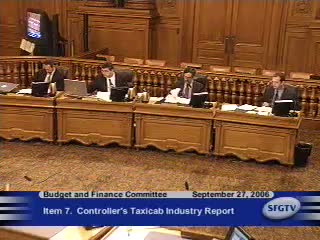
The Controller recommended an 8.23% CPI adjustment to taxi gate and meter levels and proposed a fuel surcharge option; after Taxi Commission testimony, extensive public comment, and supervisor debate the committee voted to prepare a resolution for a temporary compromise ($91.50 gate and a 50¢ fuel surcharge) that would revert to $85 and remove the surcharge if the Taxi Commission does not forward a healthcare plan within six months.
The Budget & Finance Committee held a lengthy hearing on the Controller’s taxi industry report and the Taxi Commission’s recommendations, considered public testimony from drivers, medallion holders and advocacy groups and instructed staff to prepare a conditional resolution that ties temporary gate and meter increases to progress on a drivers’ health‑care plan.
Todd Reistrom of the Controller’s Office briefed the committee on the statutory CPI review and presented inflation‑adjusted figures that would materially raise fares and gate caps from 2003 levels. Reistrom summarized a baseline administrative option of a $92 gate cap, a $2.98 flag drop, 49¢ per‑mile and 49¢ wait time — roughly an 8.23% change since 2003 — and outlined optional adjustments to hold paratransit budgets harmless and to apply a fuel surcharge tied to gasoline prices.
Taxi Commission testimony: Heidi Machen, Taxi Commission director, reported that the commission voted (5–2) to recommend a $95 gate and a 75¢ flag‑drop increase and to return to the Board within six months with additional options timed to the fiscal year. Commission members reported divided positions and referenced three motions taken at their meeting the prior night.
Public comment spanned medallion holders, company representatives and driver organizations. Company representatives and some medallion holders said companies face thin margins and supported higher gate caps (rates suggested ranged higher than the commission recommendation); driver unions and paratransit advocates urged caution, enforcement of the existing $85 cap where appropriate, and linkage of any increases to concrete health‑care delivery and fiscal‑year timing so paratransit budgets could be adjusted.
Outcome and next steps: After debate, Supervisor Aaron Peskin moved a compromise resolution that would set a $91.50 gate and a 50¢ fuel surcharge immediately, with authority to raise the gate to $95 and the surcharge to 75¢ if the Taxi Commission forwards a concrete health‑care plan to the Board within six months; absent that plan the higher levels and surcharge would revert to the current $85 gate and the surcharge would be removed. The committee agreed to prepare the resolution and continue the item for two weeks to allow the required public‑notice period and to meet the Board’s procedural deadlines.
Notable quotes from the hearing: Reistrom summarized the inflation calculation as producing "$92 inflation adjusted" gate and "$2.98 for the flag drop." Heidi Machen summarized the commission decision: "The final recommendation ... was the $95 gate and the 75¢ increase on the flag drop" which passed 5–2. Driver representative Paul Gillespie urged coordination with healthcare work and said, "My feeling ... is that I think if we're gonna have gate control and meter control ... we gotta figure out a way to maybe put a surcharge into the gates that would help companies subsidize the purchase of those vehicles."
Why it matters: The changes would raise the price of taxi rides in San Francisco and directly affect drivers’ earnings, medallion values and the paratransit budget. The committee’s compromise ties temporary revenue increases to a policy deliverable — the Taxi Commission’s health‑care plan — creating a conditional incentive for industry actors to reach agreement on health coverage for drivers.