Get Full Government Meeting Transcripts, Videos, & Alerts Forever!
Get email alerts on the School Board Voting Rights topic
No spam. Unsubscribe anytime.
Committee advances charter amendment to let noncitizen parents vote in school board elections
Summary
The Rules Committee forwarded a charter amendment to allow San Francisco residents who are parents, guardians or caregivers of students in the San Francisco Unified School District to vote in Board of Education elections regardless of U.S. citizenship. Supporters cited home-rule precedent and confidentiality protections; opponents raised equal-protection and cost concerns.
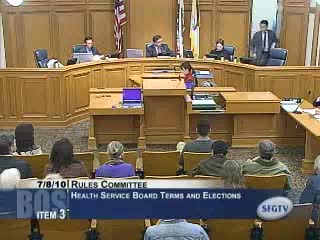
The Rules Committee recommended forwarding to the full Board of Supervisors a charter amendment that would let San Francisco residents 18 and older who are parents, legal guardians or caregivers of students in the San Francisco Unified School District vote in school board elections regardless of citizenship status.
President David Chu, sponsor of the measure, said community testimony at earlier hearings showed parents want a voice in school governance. "Given that, at this time, it's estimated that 1 out of 3 children in the San Francisco public school system has an immigrant parent," Chu said, arguing the change would strengthen accountability by giving parents representation on the school board.
Chu and supporters cited legal precedents and local home-rule authority. He said the U.S. Department of Justice had circulated guidance to regional and district directors explaining that if local, state or federal law permits a noncitizen to vote in a particular local election, federal criminal law regarding unlawful voting would not apply. Chu also noted the City Attorney's Office had "approved it as to form." Deputy City Attorney Andrew Shen told the committee the office had reviewed the measure, provided legal advice to sponsors and committee members, and agreed that approval "as to form" indicated a legally defensible argument could be made in support.
Public comment split along legal and policy lines. One commenter cited Kramer v. Union Free School District as raising constitutional equal-protection questions about granting voting rights to some noncitizens and excluding others and urged full constitutional review. Another public commenter urged a formal City Attorney opinion and warned implementation could cost the city—one witness cited a Department of Elections estimate at least $800,000 and suggested total costs could exceed $1 million if legal fights occur.
Supporters included social workers and immigrant-rights advocates who argued the change would strengthen family engagement and school outcomes. Opponents focused on legal vulnerability and possible confidentiality risks for undocumented residents; supervisors asked how records would be protected and whether state or federal law could preempt local protections.
Chu said the amendment includes a two-year implementation period and that the first school-board election under which the change could take effect would be February 2012 if the charter amendment passes in November. He said the school district and Elections Department had discussed informational outreach and confidentiality protections.
Supervisor Eric Marr moved a positive recommendation; the committee took the motion without objection and advanced the amendment as a committee report.