Get Full Government Meeting Transcripts, Videos, & Alerts Forever!
Get email alerts on the Elections topic
No spam. Unsubscribe anytime.
Committee Backs Charter Change to Consolidate City Attorney and Treasurer Elections, Citing Turnout and Savings
Summary
Supervisor Wiener—s charter amendment to move city attorney and treasurer elections into the mayoral cycle was advanced with a committee recommendation; Wiener cited higher turnout and a controller estimate of roughly $4.2 million in savings over four years. The full Board will consider the proposal.
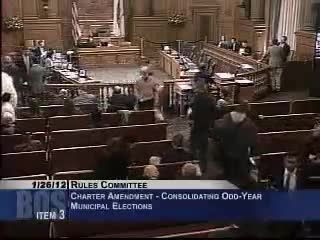
The Rules Committee on Jan. 26 voted to forward a charter amendment authored by Supervisor Scott Wiener that would change the election cycle for the city attorney and treasurer to align those offices with mayoral elections. Wiener said the shift would boost turnout for those offices and reduce the number of low-turnout, dedicated municipal elections.
"City attorney and treasurer are two of the most important positions that we elect in San Francisco," Wiener told the committee, urging consolidation to increase the electorate and reduce costs. He said the controller—s analysis estimated savings of roughly $4.2 million over a four-year cycle, about $1 million per year, by eliminating the separate odd-year elections.
Wiener described two implementation options: (1) hold an election in 2013 and again in 2015 so terms align with the mayoral cycle; or (2) extend the current officeholders— terms through 2015 (creating a one-time six-year term) to achieve immediate budget savings. Wiener said he preferred holding elections in 2013 and 2015 so that voters would elect officers to four-year terms.
Supervisors Campos and Farrell expressed support for consolidation as a simplification that could increase participation while noting procedural questions about timing. Members of the public who testified generally favored consolidation as a way to raise turnout and cut costs.
The committee moved and approved a positive recommendation to the full Board; the item will proceed to the Board for further consideration and any refinements.
Next steps: The measure will be considered at the full Board, where supervisors will weigh timing and implementation details.