Get Full Government Meeting Transcripts, Videos, & Alerts Forever!
Get email alerts on the Entertainment Commission topic
No spam. Unsubscribe anytime.
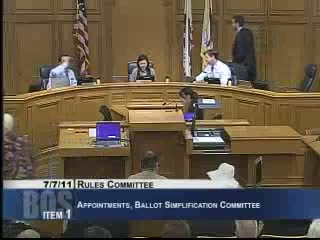
Rules Committee forwards neighborhood seat nomination for Entertainment Commission after hours of testimony
Summary
After nearly two hours of public comment and competing endorsements, the Rules Committee voted to forward neighborhood‑seat nominee Gil Sperline to the full Board of Supervisors with a recommendation, following debate about industry ties, surveillance proposals and neighborhood outreach.
The Rules Committee on Thursday forwarded a nomination for the neighborhood representative seat on San Francisco's Entertainment Commission to the full Board of Supervisors with a recommendation after extensive public testimony.
Supervisor Sean Ellsbourne moved to send forward Gil Sperline's name with recommendation; the motion passed on a 2–1 roll call after debate among committee members. Chair Jane Kim said she appreciated all four applicants and the large public turnout but said she would continue to support Glendon Hyde. Supervisors Mark Farrell and another member voted aye; Chair Kim voted no.
Supporters of the three leading candidates filled the hearing room for much of the afternoon. Gil Sperline emphasized neighborhood service, describing volunteer work on Corona Heights and traffic‑calming efforts and saying he would bring legal training and neighborhood perspective to the commission. "I represent a strong candidate for the neighborhood seat," Sperline said during his remarks.
Glendon Hyde, who also drew heavy support, framed his candidacy around outreach and harm‑reduction work in the Tenderloin and other neighborhoods and noted experience organizing street fairs and fundraisers. "I have made a personal commitment to raise a thousand dollars a year for [Community Housing Partnership]," Hyde told the committee, describing long involvement in neighborhood organizations.
Reappointments and incumbents also made their case. Jim Meeko, the incumbent neighborhood representative, highlighted his work drafting the commission's good‑neighbor policy and a proposed pre‑application process he said would require prospective nightlife businesses to meet neighbors before filing formal applications. "The good neighbor policy became a set of 12 conditions that we automatically put on every permit," Meeko said, calling that process a model for neighborhood engagement.
A central point of contention during the hearing was recent San Francisco Police Department recommendations around nightclub security, including proposals for ID scanning and temporary surveillance. Several candidates and public commenters expressed concern about privacy and civil‑liberties implications. "If the city government is going to require nightclubs to play that role, it has to be really seriously looked at," Glendon Hyde said, urging minimum intrusion and respect for First Amendment rights.
The hearing also included accusations about application materials. Speaker Michael Nolte alleged discrepancies in some candidates' application claims; supporters and other witnesses countered that the candidates had long records of community service. The Rules Committee did not make a finding on those claims; the discussion remained part of the public record.
John Ridgeley, Laura Thomas and dozens of other community members testified in favor of specific candidates, with several neighborhood groups and industry representatives urging balance between entertainment and residential interests.
The committee's recommendation sends Sperline's nomination to the full board for final confirmation. The full board will decide whether to appoint him and may consider additional public comment at that time.