Get Full Government Meeting Transcripts, Videos, & Alerts Forever!
Get email alerts on the Board Of Education Compensation topic
No spam. Unsubscribe anytime.
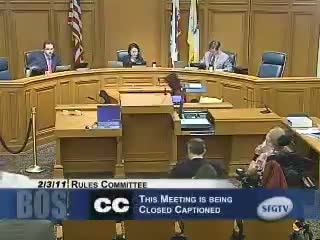
Rules Committee continues charter amendment to adjust Board of Education pay and related provisions
Summary
The Rules Committee heard testimony and public comment on a proposed charter amendment to raise Board of Education compensation, reduce some original provisions and require follow-up on election costs and long-term funding. The committee continued the item to a special meeting for additional information.
The San Francisco Board of Supervisors Rules Committee on Feb. 3 considered a proposed charter amendment to change compensation and benefits for the city’s seven Board of Education members, but continued the matter for further review.
Chair Jane Kim, a former Board of Education commissioner, summarized a package of amendments that reduced an initial $50,000 proposal to a formula tied to “one-half the salary of a first-year teacher” with a CPI adjustment beginning in July 2013, removed proposed participation in the city employees’ retirement system, eliminated a proposed lifetime-health benefit, and changed when the city’s obligation to fund the salaries would end (to when the district was repaid for Prop. 98 reductions rather than conditioned on adoption of a parcel tax).
Supervisor Bevan Dufty — who led the item’s original introduction — said the change was intended to compensate and recognize the workload of board members, noting the position has been paid only $500 a month since 1983 and that board members spend substantial time on meetings, school visits and constituent work. Dufty read letters of support from current board members and union leadership, including a message he attributed to United Educators of San Francisco leadership.
Public commenters were divided. Supporters told the committee the pay increase would help recruit and retain qualified candidates and address family strain for members who serve many hours weekly. Opponents and some supervisors raised practical concerns: Thomas Picariello questioned unclear draft language and warned of political pushback if the measure appears on a ballot during budget cuts; Supervisor Ellsberg pressed staff to clarify whether the long-term costs would fall to the city in perpetuity and asked whether the school district could assume funding or election costs.
Ellsberg also pointed out that indexing the salary to the first-year teacher plus CPI would allow the pay to escalate over time, and he argued it could be inequitable to grant raises to incumbents mid-term. Chair Kim asked staff to work with the Department of Elections and the school district to provide specifics on election costs and the likelihood Prop. 98 obligations would be repaid.
Without a full resolution, the committee voted to continue the item to a special Rules Committee meeting next Thursday for further information and discussion.
Next steps: the item will return to committee after staff and district representatives respond to the committee’s questions about election costs, long-term funding and the precise amendment language.