Get Full Government Meeting Transcripts, Videos, & Alerts Forever!
Get email alerts on the Homelessness topic
No spam. Unsubscribe anytime.
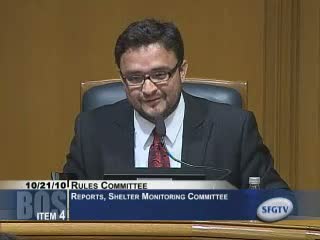
Shelter Monitoring Committee report flags training, case‑management and access gaps; follow‑up hearing ordered
Summary
The committee’s quarterly report said the city cannot track vacancy types in the shelter reservation system, transportation tokens appear insufficient, embedded case management is limited, and training compliance is low; the Rules Committee scheduled a follow‑up hearing with HSA/DPH for detailed responses.
The Shelter Monitoring Committee presented quarterly reports Oct. 21 to the Board of Supervisors Rules Committee identifying systemwide gaps in San Francisco’s shelter system and urging city action.
Bernice Casey, staff to the Shelter Monitoring Committee, summarized three reports covering the standard‑of‑care complaints for fiscal year 2009–10, two quarterly site inspection reports, and a recent turn‑away report. The committee highlighted four priorities for the coming year: improving the reservation system’s ability to measure and categorize vacancies, increasing transportation access for shelter clients, expanding case management capacity, and dramatically improving training for shelter staff.
Casey said the current reservation system cannot reliably indicate the type of vacancy (for example, whether a bed is a resource‑center reservation or a Care‑Not‑Cash bed), which limits efforts to match supply to demand. The committee also said the Human Services Agency (HSA) allotment of 1,250 transit tokens per month is small relative to the system’s needs and that some sites regularly lack tokens to get clients to shelters.
On case management, the committee reported a small number of embedded case managers in the single‑adult system (11 reported in the dataset the committee reviewed, supplemented by an eight‑person roving SF Start team), and raised concerns that many large shelters lack on‑site case management capacity. The committee said staffing definitions and expectations for case management are unclear.
The committee expressed particular concern about staff training. Based on the data collected and site responses, staff estimated compliance with training requirements was low—Committee staff said it was "probably overall below 15%" for the categories asked about in their review—and recommended the city set clearer, resourced standards. Committee members cited missing data and asked HSA for detailed follow‑up information on training coverage and shelter staff counts.
Joyce Crum of HSA responded that some draft report language was received shortly before the meeting and disputed certain characterizations; HSA and Department of Public Health staff noted they are implementing training changes tied to a recent settlement associated with a lawsuit and said HSA must have expanded training in place by Dec. 13 under the settlement terms. Kathy Tuchari, director of shelters at Episcopal Community Services, described corrective action work at large shelters and noted several embedded case managers and clinicians that serve across sites.
Advocates and shelter representatives in public comment urged more resources, better data transparency about vacant beds, stronger methodology for measuring compliance, and more consistent case‑management presence. The committee scheduled a follow‑up hearing to allow HSA and DPH to respond in detail to the report’s findings.
Chair Campos said the committee would re‑agenda the item for a return hearing to ensure agencies provide the requested data and clarify responsibilities for training and case management.