Get Full Government Meeting Transcripts, Videos, & Alerts Forever!
Get email alerts on the Homelessness Shelters topic
No spam. Unsubscribe anytime.
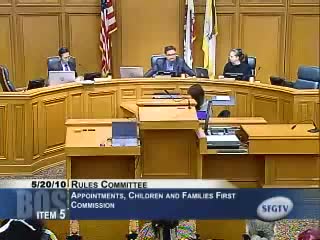
Rules Committee advances ordinance tightening shelter standards, requiring ADA/mental‑health training and on‑site reservation capability
Summary
The Rules Committee advanced an ordinance to strengthen standards of care in city shelters — adding hygiene requirements (mounted soap dispensers or single‑use soap), biannual ADA and mental‑health training for shelter staff, and expanded monitoring and on‑site reservation duties for shelters — and forwarded the measure to the full Board.
The Rules Committee on May 2030 voted to forward an ordinance to the full Board that updates the city’s shelter standards of care and expands the Shelter Monitoring Committee’s authority to track dropped or unaccepted shelter bed reservations.
The ordinance—authored by Supervisor Maher with broad stakeholder input—adds several operational requirements aimed at reducing what advocates call the "runaround" experienced by many shelter seekers. Among the amendments adopted by the Committee were language requiring restrooms to have permanently mounted liquid‑soap dispensers or single‑use individual soap packets and a provision directing biannual training for shelter staff on the Americans with Disabilities Act and on safe interactions with clients experiencing mental illness or substance use.
Jenny Friedenbach of the Coalition on Homelessness summarized the problem the ordinance targets: long waits, dropped reservations and a mismatch between reported vacant beds and people turned away. She noted the system has approximately 1,080 shelter beds for single adults while official point‑in‑time counts find thousands experiencing homelessness, and urged the Committee to act to reduce wait times and improve accountability.
Joyce Crum of the Human Services Agency explained operational details negotiated with providers: hospital stays will trigger an automatic one‑night bed preservation and longer holds will be handled on a case‑by‑case basis with HSA and the shelter; shelters with reservation desks must be able to make on‑site reservations if requested by a client; and orientation and case‑management standards will be clarified so providers understand contractual obligations.
Shelter monitors and advocates urged stronger enforcement and more staff for monitoring; the Shelter Monitoring Committee noted it currently operates with two staff and asked the city to fund any additional workload created by on‑site reservation requirements.
What happens next: The Committee took the ordinance and agreed to forward it to the full Board (with agreed amendments and a co‑sponsor). The measure will return to the Board of Supervisors for final consideration and any budgetary or implementation adjustments recommended by departments.