Get Full Government Meeting Transcripts, Videos, & Alerts Forever!
Get email alerts on the Public Safety topic
No spam. Unsubscribe anytime.
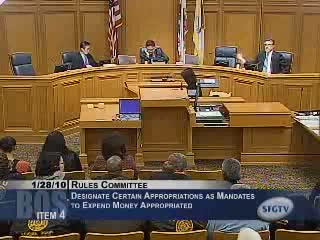
Proposed 52‑hour minimum for firefighters draws widespread opposition; committee continues item
Summary
Supervisor Avalos’ charter amendment to set a 52‑hour minimum firefighter work week generated extensive testimony from firefighters, fire‑department leadership and unions; the controller estimated roughly $6.9 million in payroll‑to‑regular‑time savings, but fire union leaders said collective bargaining should determine hours and warned the change could cost money or reduce volunteer community services. The committee continued the item for further study.
Supervisor Eric Avalos introduced a charter amendment to set the minimum average firefighter work week at 52 hours (the existing Charter language lists 48.7 hours). Avalos said the measure was intended to add long‑term budget flexibility and cited a multi‑year city shortfall; he emphasized the proposal was not intended to penalize firefighters and said he had discussed the idea with the Department of Human Resources and the Controller.
Deputy Chief Gary Masthani (speaking for Fire Chief Hayes White) and numerous firefighters and union leaders urged the committee to leave hours to the collective‑bargaining process. Masthani told the committee that changing the charter would bypass bargaining and could have unintended fiscal consequences; he said overtime practices currently save the city approximately $1.6 million and described the department’s overtime scheduling rules.
Firefighters and union leaders made three central points: (1) San Francisco’s firefighters already work high hours and handle a large run volume compared with many other jurisdictions; (2) increasing the minimum work week could mean the equivalent of up to nine extra 24‑hour shifts (roughly 200 hours) per firefighter per year, with consequences for family life, public safety and volunteer community programs; and (3) past concessions and givebacks by the fire service suggest they have been cooperative in prior budget cycles and should be addressed through bargaining.
The Controller’s Office (Empek Stevenson) explained the mechanics behind the city’s estimate: if work now paid at overtime rates can instead be paid at regular rates via a higher base, the city could realize an estimated $6.9 million in reduced overtime spending because some hours would no longer be paid at overtime premiums. Ms. Stevenson said the office’s estimate relies on assumptions about hours currently paid at overtime rates and does not automatically resolve bargaining outcomes.
Fire union President John Hanley and many rank‑and‑file firefighters urged the committee to "kill" the measure and repeatedly stressed the operational intensity of San Francisco’s fire service, the moral and family costs of extra hours, and the potential for blowback. They also disputed the timing of any savings: union representatives said any ballot‑driven charter change would ultimately be negotiated and could trigger wage adjustments that offset projected savings.
Outcome and next steps: The committee heard extended public comment and testimony, asked the Controller and DHR for comparative data and historic giveback documents, and agreed to continue the item for a week to allow further study, meetings with labor and technical refinement of the proposal.